

If you have vomit stains on your clothes, sheets, or towels, choosing the wrong wash cycle can set the stain permanently and trap the odor. Many people immediately turn to hot water, thinking that higher heat means better cleaning. In reality, this method often makes the problem worse. So, what is the best laundry setting to properly and safely clean vomit?
The correct setting usually involves a cold pre-rinse, followed by a normal or heavy-duty cycle with lukewarm water and an extra wash. However, the full answer depends on the type of fabric and how long the stain has been sitting there.
Why Vomit Requires a Specific Wash Setting
Vomit is not a typical stain. It contains protein, stomach acid, oils, and food particles. Protein stains react strongly to heat. If you apply hot water before rinsing, the proteins bond tightly with fabric fibers. That bonding makes stains harder to remove and can leave a yellowish mark even after washing.
Because of this, temperature and wash cycle selection are critical.
Not Sure Which Setting to Choose?
If you’re still unsure what the best laundry setting is to clean vomit for your specific fabric, temperature limit, or washer type, use our Laundry Mode Selector Tool. It quickly recommends the safest wash cycle, water temperature, and rinse option based on your fabric and stain level — so you avoid damage and remove odor properly the first time.
Cold Rinse Before Washing
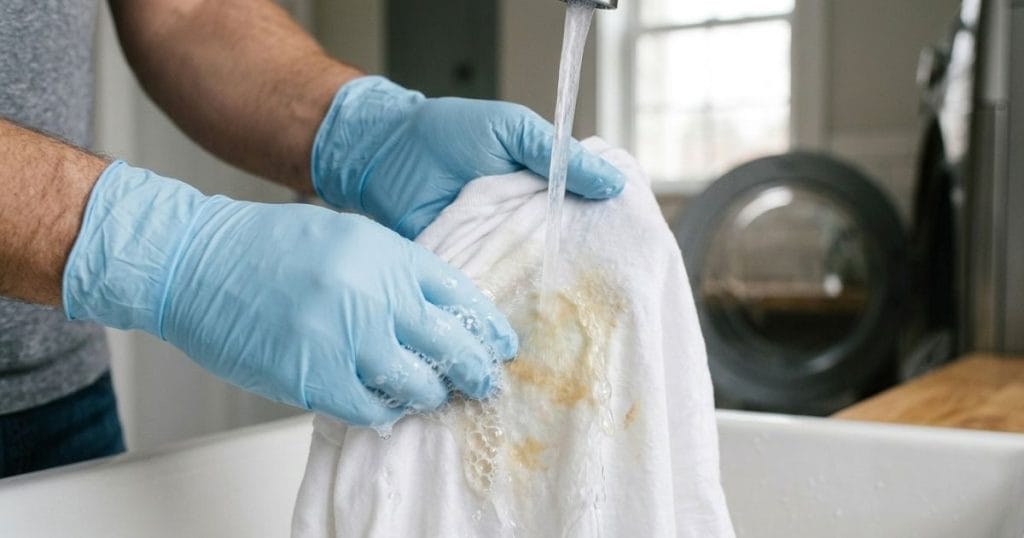
Before putting the item in the washing machine, gently remove any stubborn vomit residue. Then rinse the stained area thoroughly with cold running water. Wash from the back of the garment so that the stain is pushed outwards rather than deeper into the fibres.
Cold water prevents proteins from coagulating. One of the most common reasons why vomit stains remain after washing is skipping this step.
Best Laundry Setting for Everyday Fabrics
For cotton, polyester, and most common fabrics, the best laundry setting to clean vomit is:
- Cycle: Normal or Heavy Duty
- Water Temperature: Warm
- Spin Speed: High
- Extra Rinse: Yes
Heavy duty works best for dense materials like towels and bedding because it agitates for a longer period of time and provides strong cleaning power. The normal cycle is usually sufficient for light clothing with fresh stains.
Hot water helps dissolve residue and reduce bacteria without damaging most fabrics. Avoid starting with hot water unless the stain has already been cleaned and the care label does not allow for high heat.
Best Setting for Bedding and Towels
Sheets and towels absorb liquids deeply. In this case, a heavy or heavy cycle is usually more effective than a quick wash. These cycles allow for more water circulation and better agitation, which helps remove both stains and odors trapped inside the dense fibers.
An extra wash is especially important for bed sheets. The smell of vomit can linger even after visible stains have disappeared, and a second wash helps remove lingering particles.
Best Setting for Delicate Fabrics
For delicate items such as silk, wool, or baby clothing, use a gentler approach:
- Cycle: Delicate or Normal (depending on care label)
- Temperature: Cool or Warm
- Spin: Medium
Vigorous agitation can damage fragile fibers, so avoid heavy-duty use unless the material is durable. In this case, the choice of detergent becomes more important than the strength of the cycle.
Choosing the Right Detergent
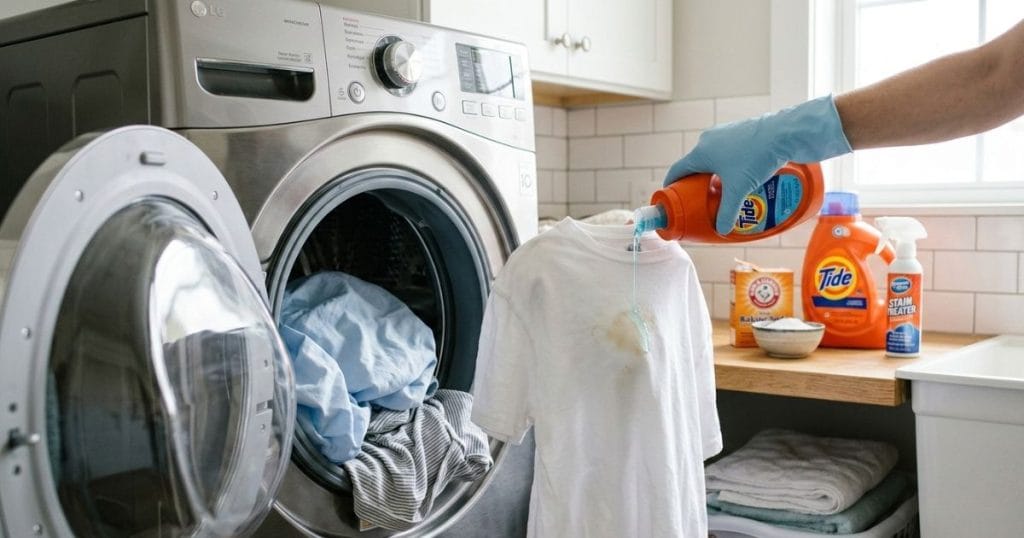
An enzyme-based detergent works best for vomit stains. Enzymes break down protein at a microscopic level, helping remove both stains and odor more effectively than regular detergent alone.
For persistent smells, baking soda can be added directly to the drum. White vinegar can be added during the rinse cycle to help neutralize odor. Do not mix vinegar with bleach.
Should You Use Hot Water?
Hot water sanitizes durable fabrics like white towels, but only after an initial cold rinse to prevent stains from setting. For fabrics that aren’t heavily stained, warm water offers a safe and balanced alternative.
Why Extra Rinse Matters
Even after washing, microscopic odor particles can remain in fabric. An extra rinse helps flush out detergent residue and remaining contaminants. This is especially useful for children’s clothes, bedding, and heavily soiled items.
Does Vomit Stain Clothes?
Many people wonder, does vomit stain clothes, and if it does, can it be easily washed in the washing machine? The truth is, vomit can leave both visible stains and strong odors on clothes. Since vomit contains stomach acid, food particles, and protein compounds, it can quickly soak into fibers and cause vomit stains on clothes if not cleaned properly. In some cases, the stains may appear yellow or slightly brown after drying, especially on cotton, linens, or light-colored fabrics.
Fresh stains are usually easy to remove, but vomit stains on clothes can become more difficult if the fabric is exposed to heat too quickly. Heat causes the proteins in the stain to bond to the fibers of the fabric, which can permanently set the stain. That’s why proper washing and the right wash temperature are essential when dealing with vomit-stained clothes.
What Temperature to Wash Clothes With Vomit
A common mistake people make is to use hot water right away. Many people assume that high heat will clean clothes faster, but it’s crucial to understand what temperature to wash clothes at if you’ve vomited. Experts generally recommend rinsing clothes in cold water before putting them in the washing machine. Cold water helps prevent proteins from bonding to the fabric, which prevents stains from setting.
After the first wash, you can wash the item in hot water if the fabric allows it. When people ask what temperature to wash clothes at if they vomited, the safest method for most fabrics is to rinse in cold water and then follow with a warm wash cycle with detergent. Hot water helps remove odors and bacteria while also protecting the fabric from damage.
How to Wash Vomit Out of Clothes in Washing Machine
Once you’ve removed the excess residue, the next step is to learn how to properly wash vomit out of clothes in the washing machine. First, turn the garment inside out and rinse the stained area under cold running water. This will push the stain outward instead of forcing it deeper into the fabric.
After washing, place the garment in the washing machine and choose a normal or heavy-duty cycle, depending on how dirty the item is. Using an enzyme-based detergent is especially effective because it breaks down the proteins responsible for odor and discoloration. This method also works well for everyday clothing, towels, and even vomit-stained clothes in a washing machine that has multiple contaminated items.
Adding an extra wash cycle can also help remove lingering odors. In some cases, adding baking soda or a small amount of vinegar to the wash cycle can further neutralize odors and leave clothes smelling fresh.
Washing Vomit Out of Sheets and Bedding
Cleaning bedding requires a little more attention because the liquid is absorbed deep into the fabric. Getting vomit out of sheets often requires a longer wash cycle and longer agitating times. Sheets, blankets, and pillowcases trap both moisture and odors, so a heavy-duty cycle with hot water usually works best.
Before putting the bedding in the washing machine, gently rub out any residue and rinse the stained area with cold water. After washing the sheets, inspect them carefully before drying. If any stains remain, repeat the wash cycle because the heat from the dryer can permanently set the stain.
How to Remove Vomit Stain From Clothes
If visible stains remain after washing, you may need to pay special attention to how to remove vomit stains from your clothes. Applying a stain remover or enzyme detergent directly to the affected area can break down the remaining protein. Let the solution sit for about 10 to 15 minutes before washing again.
In difficult situations, people often ask how to remove old vomit stains from clothes. For old stains, soak the clothes in cold water with detergent before washing again. This soaking process loosens the dried residue and improves the performance of the next wash cycle.
With the right temperature, the right wash, and a strong detergent, even stubborn vomit stains on clothes can usually be completely removed, leaving the clothes clean and odor-free.
Avoid These Common Mistakes
Using a Quick Wash cycle is one of the biggest mistakes. Quick cycles do not provide enough time or water volume to fully remove organic stains like vomit.
Another mistake is placing the item in the dryer before confirming the stain and smell are completely gone. Heat from the dryer can permanently lock in both stain and odor.
Always air dry first if possible. Once you are certain the garment is clean, then use the dryer.
So, what is the best laundry setting to clean vomit?
Start with a thorough cold rinse. Then wash using a Normal or Heavy Duty cycle with warm water, strong enzyme detergent, high spin speed, and an extra rinse. Adjust the cycle slightly based on fabric type, but avoid quick wash and avoid hot water at the beginning.
Using the correct setting ensures the stain is removed, the odor is eliminated, and the fabric remains undamaged.