
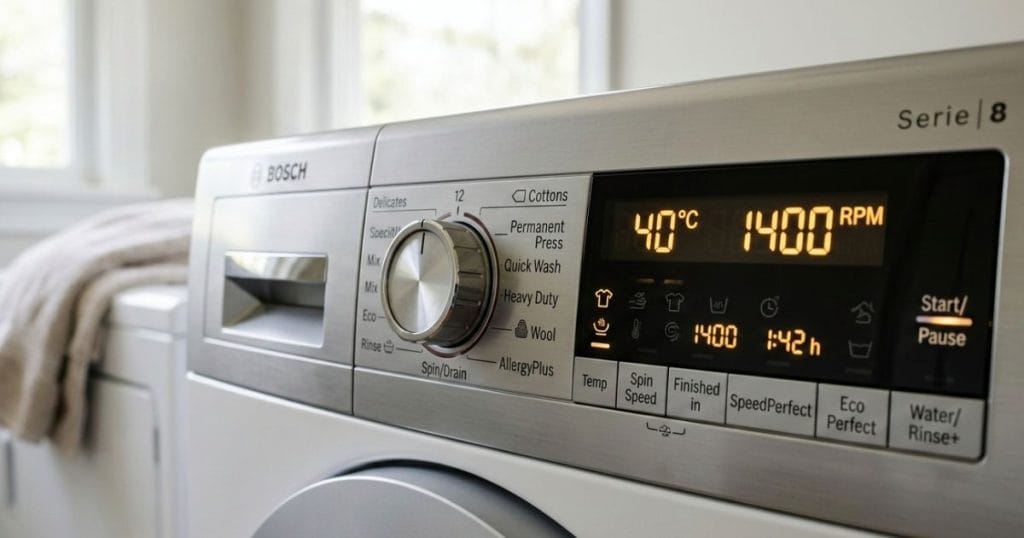
Choosing the right washing machine setting doesn’t seem like a guessing game. Yet most households set everything to “normal” pressure and hope for the best. This approach shortens the life of clothes, increases shrinkage, and wastes energy. The clear understanding of Bosch Washing Machine Cycles Explained changes everything. When you understand how the drum movement, water temperature, and spin speed work together, laundry becomes controlled, predictable, and fabric-safe.
Bosch washing machines are known in the U.S. for their precision engineering, quiet operation, and efficient water use. Unlike some brands that rely on aggressive agitation, Bosch front-load systems focus on controlled tumbling and high-spin extraction. Many competing blog posts simply list cycle names without explaining what actually happens at each stage. This guide will explain in detail fabric compatibility, cotton-specific settings, temperature science, spin speed logic, and compare Bosch and Whirlpool models.
If you want clothes that last longer and have consistent washing results, first understand the mechanics of the cycle.
How Bosch Washing Machine Cycles Actually Work
Each Bosch washer cycle is based on three variables: wash action intensity, water temperature curve, and final spin RPM. Instead of using a central agitator like traditional top-loaders, Bosch front-load washers rely on gravity and a tumbling action combined with precise water control.
The Normal cycle balances cleaning and fabric care. Heavy Duty increases wash time and drum movement for thicker fabrics. Delicate reduces tumbling speed and reduces spin RPM. Permanent Press alters spin intensity and cool-down phases to reduce wrinkles. Quick Wash reduces total time but maintains efficient spin extraction.
Many competing guides fail to explain that Bosch machines compensate for lower water usage through optimized drum rotation patterns. This means cycle selection is even more important than in high-water top-load machines.
Understanding these mechanics is the foundation for truly understanding Bosch washing machine cycles.
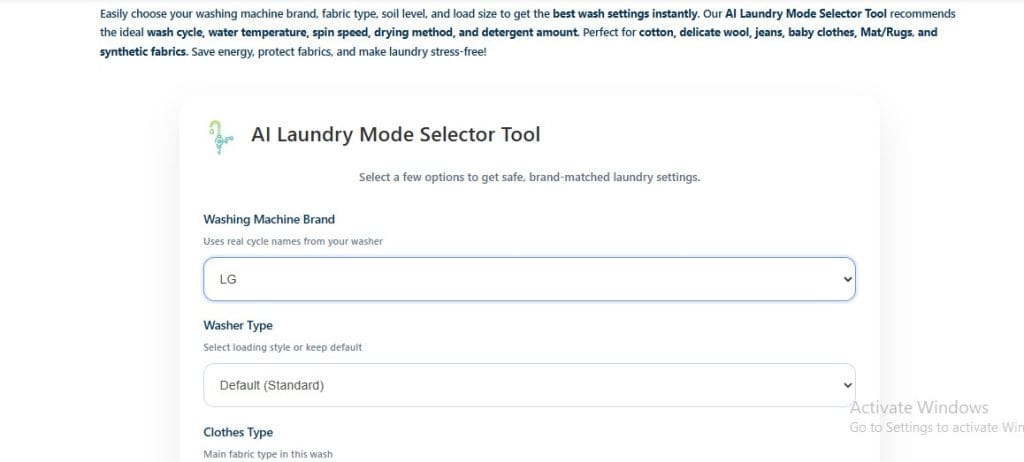
Integrating Your Laundry Mode Selector Tool
The Laundry Mode Selector tool helps users select the right Bosch cycle by asking about fabric type, soil level, load size, and color category. Based on these inputs, it recommends the ideal cycle, temperature, and spin speed combination.
This eliminates uncertainty and prevents costly fabric damage. Instead of guessing between Normal, Heavy Duty, or Permanent Press, users get immediate guidance on the appropriate cycle. This tool is especially useful in mixed-cloth households where one wrong setting can affect multiple garments.
Matching Fabric to the Right Cycle
The type of fabric determines the ideal combination of agitation, temperature, and spin. Cotton, polyester blends, stretch fabrics, and heavy knits react differently under pressure.
Light cotton T-shirts work best on a normal cycle with warm or cold water and a medium to high spin. Thick cotton bath towels require a high temperature and heavy duty spin with a strong extraction. Cotton-poly blends respond well to a permanent press because it balances the spin and reduce wrinkles. Delicate fabrics such as lace, thin cotton blouses, or rayon should always be washed on a delicate cycle with cold water and a low spin.
Bosch machines are particularly strong at handling synthetic fabrics due to their gentle tumbling design. This makes them ideal for mixed modern garments.

Best Settings for Different Types of Cotton
Cotton is often considered a category, but the density and thickness of the weave make all the difference.
Lightweight 100% cotton shirts should be washed on a normal cycle in cold or warm water. A high spin is safer because front-load drying is more controlled than aggressive top-load movements. Thick cotton towels require a heavy-duty wash with hot water if they are white, but colored towels should be avoided repeatedly at high heat to prevent fading.
Cotton bed sheets on a normal cycle work best with warm water and a medium-high spin to minimize deep wrinkles. Denim, although cotton, benefits from cold water and medium spin to preserve color and prevent stiffening.
Heat remains the main cause of shrinkage. Lightweight cotton shrinks faster because the fibers contract more easily under heat stress. Bosch’s controlled drum movement reduces some of the mechanical stress, but temperature selection still determines long-term durability.
Spin Speed Explained: Why RPM Matters
Bosch washers are known for their high spin speeds, often reaching 1200-1400 RPM depending on the model. A high spin removes more water before drying, reducing dryer time and saving energy. However, high RPMs increase the tension on seams and elastic materials.
Thick towels and bedding tolerate high spins well. Cotton blends and office wear work best with a medium spin. Delicate and stretchy fabrics require lower RPMs to avoid distortion.
Many households ignore spin settings altogether. This mistake results in stretched collars, weakened waistbands, and premature fabric wear. One of the easiest ways to extend the life of clothing is to adjust the spin setting correctly.
Temperature Recommendations for Long-Term Fabric Care
Cold water protects dark cottons and synthetics from fading. Warm water works best for everyday clothes with medium soil. Hot water should be reserved for heavily soiled white cottons or for sanitizing.
Bosch machines often include precise temperature calibration, meaning the selected temperature is maintained consistently throughout the cycle. This precision is great for stain removal, but it increases the importance of selecting the right setting.
Using unnecessarily hot water accelerates fiber breakdown. Smart temperature control saves both clothing and energy efficiency.
Comparing Bosch and Whirlpool Washing Machine Cycles
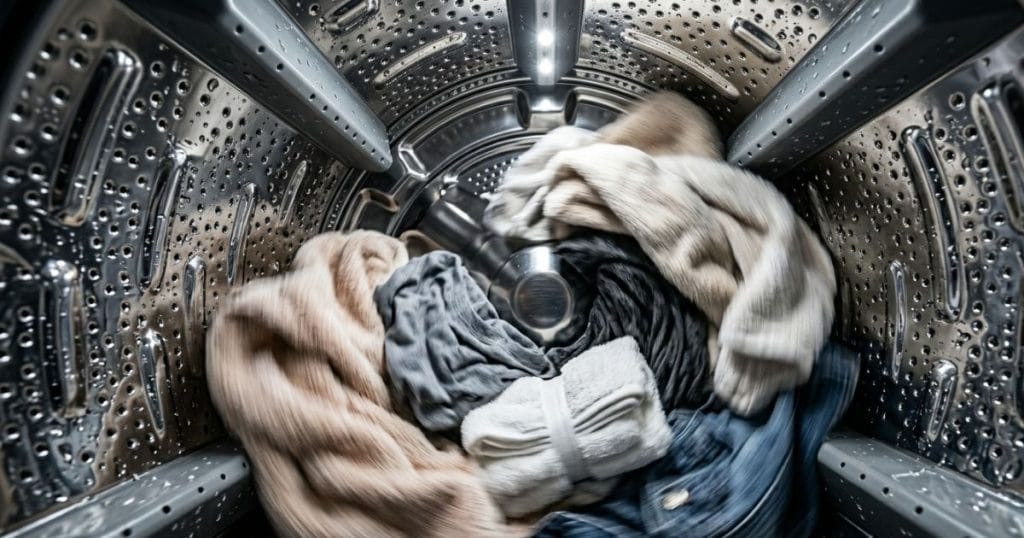
Although Bosch and Whirlpool differ in design philosophies, their cycle categories are similar. Whirlpool top-load models often rely on powerful mechanical agitation, while Bosch front-load systems rely on tumbling action and higher spin extraction.
Whirlpool’s heavy-duty cycles typically emphasize powerful agitation and deep water levels. Bosch achieves similar cleaning performance through extended tumbling and controlled heating. For delicate fabrics, Bosch often provides gentler overall handling due to its drum design.
If you understand Whirlpool’s cycle guide, switching to Bosch essentially requires adjusting expectations around water levels and spin performance.
Common Laundry Mistakes That Damage Clothes
Overloading a Bosch washer reduces tumbling efficiency and prevents proper detergent distribution. Mixing heavy towels with light shirts creates an imbalance during high spin cycles. Using hot water for every cotton load accelerates shrinkage and fading. Excess detergent creates buildup that interferes with the wash cycle.
Another overlooked mistake is skipping the regular drum cleaning cycle. Bosch machines often have maintenance reminders. Ignoring them can lead to long-term performance degradation.
Laundry mistakes are rarely dramatic. They cause gradual damage that becomes visible after a few months.
Front-Load Efficiency and Energy Savings
Bosch front-load washers are designed for low water consumption and high extraction efficiency. High spin speeds significantly reduce drying time, reducing overall energy consumption. Cold water washing improves cleaning performance without compromising performance when combined with quality detergents.
Full but balanced loads maximize water efficiency. Small adjustments to cycle and temperature selection can result in significant long-term savings.
Best Bosch Washing Machine Cycle Settings
Heavy cotton fabrics like towels, bathrobes, and denim jeans require more washing than lighter fabrics. The Heavy Duty cycle on Bosch machines increases the wash time and maintains a consistent high temperature, making it ideal for white towels and thick fabrics. However, colored denim should be washed on a cold setting to avoid fading.
For bedding and large cotton sheets, the Normal cycle with warm water and a high spin works best. Bosch’s Drum Balance system helps prevent tangling, which reduces wrinkling. A medium-high spin is usually enough to remove moisture without overstressing the fibers.
Lightweight everyday clothing works best on a Normal or Permanent press with warm water and a medium spin. Delicates should be washed on a cold setting with a low spin to protect stitching and lace details.
Changing fabric density and moisture retention can dramatically change the results of a load wash. Heavy fabrics require longer cleaning times, but not excessive heat. Lightweight fabrics need protection from excessive drainage.
Understanding Bosch washing machine cycles means mastering the behavior of fabrics rather than memorizing buttons. When you match the drum action, temperature, and spin speed to the structure of the fabric, clothes last longer and cleaning is consistent.
Doing laundry in a deliberate manner keeps your clothes safe and reduces long-term costs. Small adjustments to the settings create lasting results.