
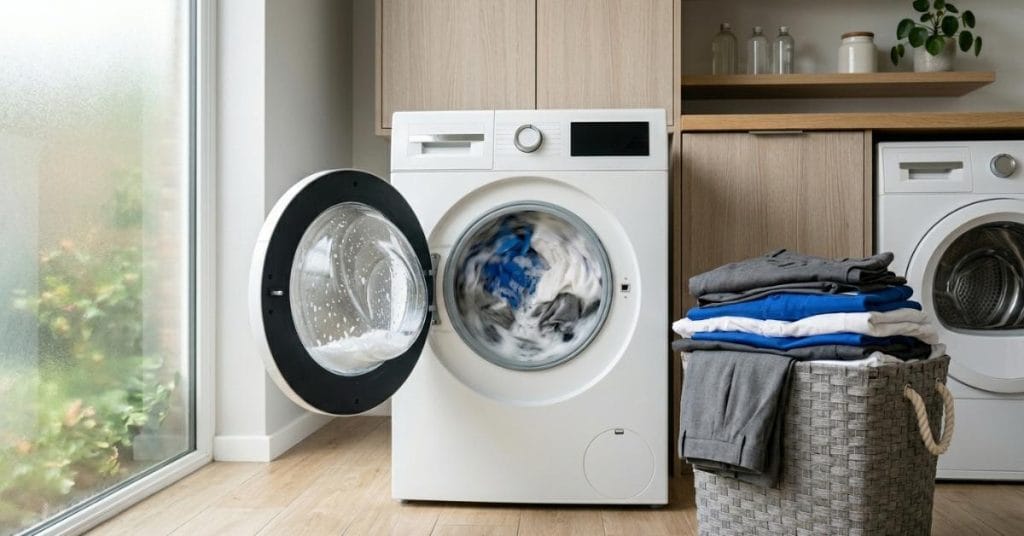
Uniforms differ from regular clothing in one important way: They are worn repeatedly in the same situations and are often exposed to sweat, dust, bacteria, and constant friction. Whether it’s a school uniform, office wear, medical scrubs, or industrial clothing, uniforms go through an extensive wear cycle that requires advanced cleaning.
Yet most people treat them like any other piece of clothing, and throw them in the washing machine without thinking twice about the settings or the needs of the fabric.
This is where the problems begin. Over time, uniforms can fade in color, weaken in stitching, fade in logos, and start to smell after washing. Many people think this is normal wear and tear, but in reality, it’s often caused by using the wrong washing machine cycle.
Understanding the right washing machine cycle for uniforms can completely change the look, feel, and durability of your clothes. This guide doesn’t just offer superficial advice, but discusses real problems, effective solutions, and proven techniques that will help you clean your uniform effectively without damaging it.
Why Uniforms Require Special Washing Attention
Uniforms are designed to be durable, but being durable doesn’t mean they will last forever, even if washed incorrectly. Repeatedly wearing uniforms allows sweat, body oils, and environmental dirt to build up and penetrate deep into the fabric fibers. Unlike regular clothing, which may be worn occasionally, uniforms are often worn daily or multiple times a week, increasing both the frequency of washing and the risk of damage.
Another important consideration is the fabric material. Many uniforms are made from blends like cotton-polyester or synthetic fibers, which are designed to resist wrinkling and maintain their shape.
These fabrics respond differently to water temperature, agitation, and spin speed. If the wash cycle is too harsh, it can prematurely break down the fibers. If it’s too gentle, it can fail to remove dirt and bacteria that have built up inside.
This creates a balance issue. You need enough cleaning power to remove contaminants, but not so much that it damages the texture of the uniform. It is important to choose the right washing machine cycle to strike this balance.
Understanding Washing Machine Cycles in a Practical Way
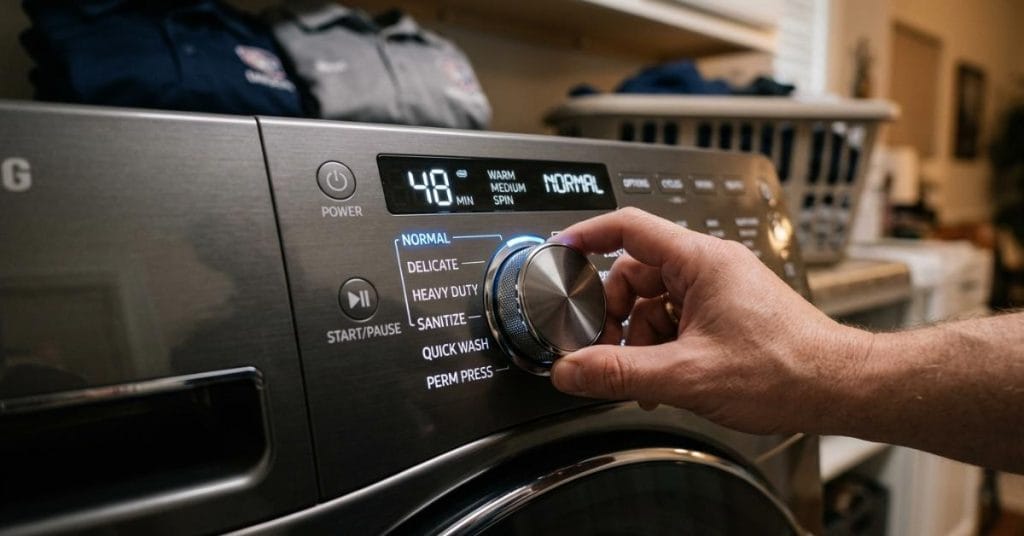
Most modern washing machines have multiple cycle options, but many users don’t fully understand what they actually do. A wash cycle isn’t just a matter of time; it also controls the intensity of the agitator, water level, temperature, and spin. Each of these factors plays a role in how clean your uniform will be.
The Normal cycle is usually the most commonly used option, and for good reason. It provides a balanced mix of agitator and spin that is effective for everyday clothes. For uniforms worn in relatively clean environments, such as the office or school, this cycle often cleans well without causing excessive damage.
However, the problem arises when people rely on the same cycle for all situations. A very dirty construction worker’s uniform requires a completely different approach than a lightly soiled branded shirt. It may seem convenient to use the Normal cycle for everything, but it often results in your clothes being either less clean than they need to be or being overly damaged.
For example, the Gentle or Delicate cycle reduces agitation and spin speed, which helps protect sensitive fabrics. This is especially important for uniforms with printed logos, embroidery, or thin fabrics. On the other hand, the Heavy-Duty cycle increases agitation and extends the wash time, which is perfect for removing tough stains and deep-set dirt.
The Sanitize cycle uses high heat to destroy bacteria and allergens, which is crucial for uniforms used in healthcare or food-related environments. However, frequent use of high heat can weaken fabrics, so it must be used strategically, rather than as the default option.
Real Problems People Face When Washing Uniforms
One of the most common issues is color fading. Many users notice that their uniforms lose their shine after just a few washes. This is often due to using hot water or using an overly aggressive wash cycle. Heat accelerates the breakdown of colors, while vigorous agitation wears down the surface of the fabric, making the color appear dull.
Another common complaint is lingering odor. Uniforms sometimes don’t smell fresh even after washing. This happens when the wash cycle is too short or too gentle to completely remove sweat and bacteria. Quick wash cycles are often to blame. While these save time, they reduce cleaning effectiveness, especially on heavily used garments.
Fabric damage is another silent problem. Uniforms can start to look wrinkled, lose their shape, or develop small tears. This is usually caused by repeatedly using heavy-duty cycles or high-speed spins on fabrics that don’t require as much intensity. Over time, the fibers weaken, and the garment wears out faster than expected.
Fabric shrinkage is also a major concern, especially with cotton uniforms. Many users unknowingly dry their clothes in hot water or high heat, which causes the fabric to shrink. Once a uniform has shrunk, it is almost impossible to get it back to its original size.
These problems are not accidental. They are a direct result of incorrect washing methods, and they can be avoided with a better understanding and control of this issue.
Choosing the Right Washing Machine Cycle for Uniforms
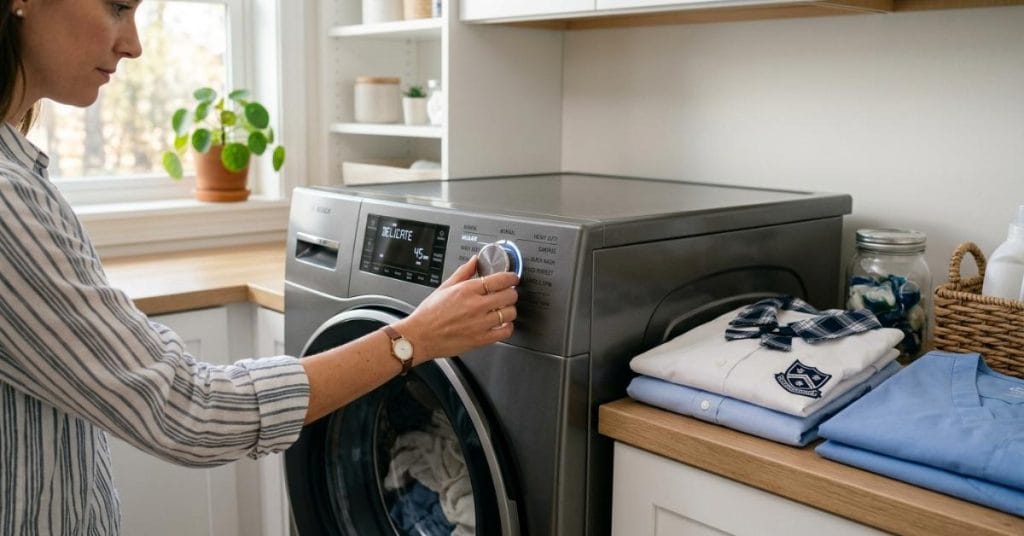
The best approach is to adjust the cycle based on the condition and type of uniform rather than relying on a single cycle. For everyday use, a regular cycle with either cold or warm water is usually the safest and most effective option. It provides adequate cleaning power without putting unnecessary stress on the fabric.
For delicate uniforms, such as those with logos or thin fabrics, using the Gentle cycle helps maintain their beauty. It reduces friction and prevents damage to decorative elements, which can easily be damaged by vigorous shaking.
Uniforms that are heavily soiled, oily, or sweaty may require a heavy-duty cycle. However, it should be used with caution and not as the default option for every wash. Overusing this cycle can shorten the life of your uniform.
In applications where hygiene is paramount, such as medical or kitchen uniforms, the Sanitize cycle can be used occasionally to eliminate bacteria. The key is moderation, as excess heat can weaken the fibers over time.
Water Temperature and Its Hidden Impact
Water temperature plays a bigger role than most people realize. Cold water is generally the safest for preserving the color of fabrics and preventing shrinkage. It also reduces energy consumption, making it a viable option for regular washing.
Warm water provides a neutral solution that helps dissolve detergent more effectively while still being gentle enough for most fabrics. It is effective for moderately soiled uniforms, which have a slightly higher cleaning power than cold water alone.
While hot water is effective at killing germs, it should be used sparingly. It is best used only for deep cleaning needs. Frequent use of hot water can fade colors, shrink fabrics, and degrade the overall quality of the fabric.
The Importance of Proper Washing Habits
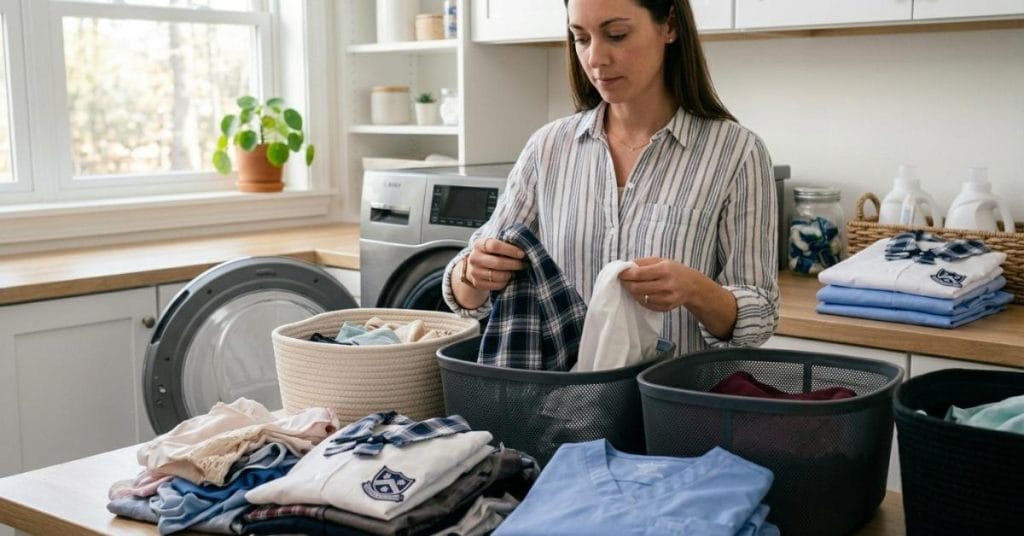
Even the best wash cycle can’t compensate for poor washing habits. Overloading the washing machine is a common mistake that reduces cleaning efficiency. When there’s little room for the clothes to move, the water and detergent can’t circulate properly, leaving the clothes partially soiled.
Another overlooked step is pre-preparation. Stains shouldn’t be blamed solely on the washing machine. Using a stain remover or gently rubbing the stained area before washing can significantly improve results and reduce the need for repeated washing.
Washing uniforms inside out is a simple but effective technique that protects the outer surface from abrasion. This helps maintain the color of the fabric and prevents visible fading, especially on dark-colored uniforms.
Drying is another important step. Drying at high heat can undo all the care you’ve taken during washing. Air drying is always the safest option, as it maintains the integrity of the fabric and prevents shrinkage.
How Smart Tools Improve Washing Accuracy
One of the biggest challenges users face is uncertainty. People often guess which cycle or settings to use, resulting in inconsistent results. This is where smart tools make a real difference.
Tools like the Washing Cycle Calculator and Laundry Time Estimator on the Washly website help users make informed decisions. Instead of relying on guesswork, users can determine the best cycle based on fabric type, load size, and soil level.
Error code guides and Error code calculators also play an important role, helping users quickly troubleshoot problems with their machines. When a washing machine is not working properly, it can affect cleaning performance and cause poor results despite selecting the right cycle.
By incorporating these tools into the washing process, users gain more control and confidence, which ultimately leads to better results and longer-lasting clothes.
Long-Term Strategy for Uniform Care
Taking care of your uniform isn’t just about washing it once; it’s about maintaining it consistently over time. Using the right cycle, temperature, and good habits repeatedly creates a cumulative effect that extends the life of your clothing.
Washing your uniform only when needed, rather than after every wear, can also reduce damage. At the same time, delaying washing for too long can cause stains and odors to set in, making them harder to remove. Finding the right balance is key.
Washing your uniform separately from heavier items like towels or jeans can help avoid unnecessary friction. Mixing different types of fabrics at the same time often results in uneven cleaning and increases damage.
A Smarter Way to Wash Uniforms
Most people don’t realize how much control they have over the durability of their uniforms. The difference between a uniform that lasts just a few months and one that stays in good condition for years is largely down to washing habits.
Choosing the right washing machine cycle for uniforms isn’t complicated, but it does require awareness and intention. When you select the cycle according to the type of fabric and the amount of dirt, use the right temperature, and avoid common mistakes, the results are immediately noticeable.
Uniforms stay brighter, are more comfortable to wear, and maintain their shape for longer. At the same time, the need to change uniforms frequently is reduced, saving both money and effort.
Common Uniform Washing Mistakes That Damage Fabric Faster
Many people think that uniforms are worn out by everyday use, but in reality, washing habits are often the biggest reason for uniforms losing their value quickly. Even expensive uniforms can fade, shrink, or become wrinkled if the wrong washing methods are used repeatedly. Understanding these mistakes can help increase the durability of the fabric and improve overall cleanliness.
One of the most common problems is overusing the Quick Wash cycle. While the Quick Wash setting saves time, it is not designed for heavily used clothing. Laundry experts explain that the Quick Cycle works best for lightly soiled clothing and may not completely remove sweat, odors, or bacteria from uniforms. Many people notice that the odor remains on uniforms even after washing, because the short cycles don’t give enough time to remove deep-seated dirt.
Another big mistake is using the Heavy-Duty Cycle too often. Heavy-duty settings use powerful agitation and a long wash cycle to remove stubborn stains and dirt. While this may be effective for industrial clothing or muddy uniforms, repeated use on everyday school or office uniforms can gradually weaken the fibers and ruin the stitching. Laundry experts point out that unnecessary overwashing can cause clothes to fade faster and damage the fabric.
Overloading the washing machine is another problem that affects cleaning efficiency. When the washer is crammed with too many uniforms, the clothes cannot move freely inside the drum. This restricts water movement and prevents the detergent from spreading evenly. As a result, the uniforms may come out partially soiled or covered in detergent residue. Some users online have also complained that overloading the machine causes excess soap to build up and clothes do not get cleaned properly.
Getting the water temperature wrong is also a very common mistake. Many users believe that hot water always cleans better, but high heat can fade colors, shrink fabrics, and weaken elastic materials over time. Laundry experts recommend using cool or lukewarm water for most uniforms because it effectively cleans, preserves the color of the fabric, and reduces stress on the fabric. Cold water is especially beneficial for dark-colored uniforms and synthetic fabrics because it helps them last longer.
Another hidden mistake is ignoring the type of fabric. Cotton, polyester, sportswear, and blends—all of these fabrics react differently to washing cycles. It may seem easy to use a specific setting for each uniform wash, but this increases the risk of damaging the fabric. Experts explain that gentle agitating is necessary for delicate fabrics, while heavily soiled work uniforms may require a more powerful cycle to get a good clean.
Drying habits also play a big role in the durability of uniforms. Drying at high heat can damage fabric fibers faster than washing. Repeated dryer use can shrink fabrics, cause logos to crack, and stiffen fabric weaves. Many laundry experts recommend air drying whenever possible, as it helps maintain the strength and color quality of the fabric.
Another overlooked factor is overwashing. Some people wash uniforms after every use, even when they aren’t very dirty. Experts say overwashing causes unnecessary damage to the fabric over time. Washing only when needed and choosing the right washing machine cycle for your uniform can significantly improve the durability and appearance of your clothes.
Small changes in washing habits can make a big difference. Choosing the right cycle, avoiding overwashing, using the right water temperature, and paying attention to the type of fabric can help keep uniforms clean, fresh, and wearable for longer.