
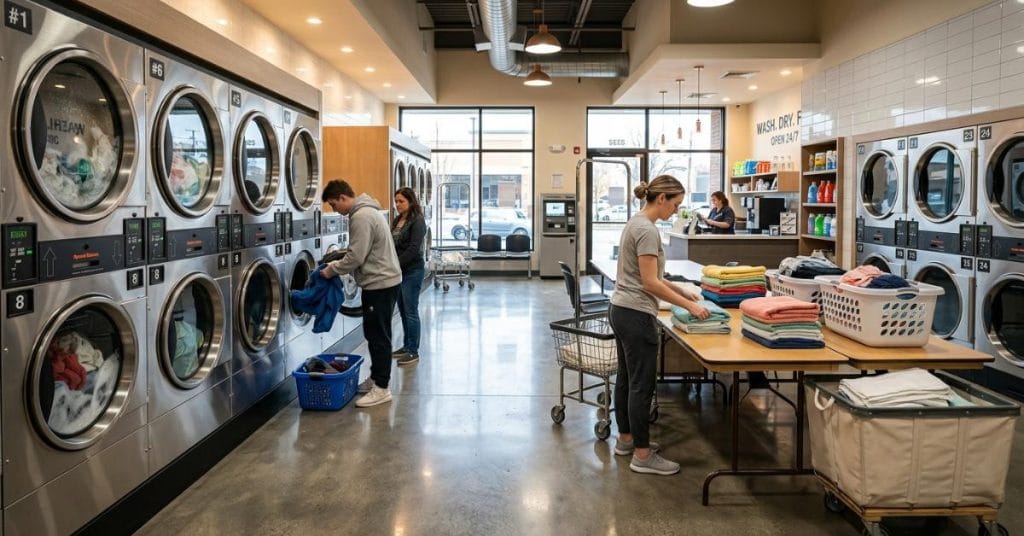
While the laundry industry may seem simple from the outside, there is a well-thought-out business plan behind every successful laundromat or laundry pickup service. Many enter the business thinking that all they need is a washing machine and a storefront. Within a few months, they realize that utility bills are coming in higher than expected, machines are constantly breaking down, customers are complaining about damaged clothes, and profits are disappearing faster than expected.
A profitable washing machine business is built on a plan, operational skills, customer trust, and long-term cost control. Without the right strategy, even expensive equipment and a great location can fail.
The good news is that the laundry industry is growing because people are always in need of clean clothes. Busy lifestyles, apartment living, dual-income families, hotels, gyms, salons, and restaurants all create a steady demand for professional laundry services. Unlike trend-driven businesses, laundry services solve an everyday need.
In this guide, we will explain how to create a realistic washing machine business plan, avoid beginner mistakes, manage operating costs, choose the right machine, attract regular customers, and build a laundry business that can grow in the long term.

Why the Laundry Business Still Has Strong Demand
Modern lifestyles have increased the demand for convenience services. Many people no longer want to spend hours each week washing, drying, and folding clothes. City apartment dwellers often lack large-capacity machines, while professionals value their time more than ever.
This creates opportunities for several types of laundry businesses:
- Self-service laundromats
- Wash-and-fold services
- Pickup and delivery of laundry
- Commercial laundry services
- Specialized fabric care services
The reason this industry is attractive is its recurring revenue. Customers don’t just buy laundry services once. They come back on a weekly or monthly basis. If the operations are managed properly, this recurring business generates a stable long-term income.
However, competition is increasing. Customers now expect a cleaner environment, faster service, safer laundry for clothes, and the convenience of online booking and pickup. Businesses that fail to modernize often struggle even in high-demand areas.
What Is a Washing Machine Business Plan?
A washing machine business plan is a complete operational outline that explains how your business will operate, make a profit, manage costs, and attract customers.
A strong laundry business plan includes:
- Startup budget
- Equipment planning
- Utility cost estimation
- Market research
- Target audience
- Pricing strategy
- Revenue forecasting
- Marketing strategy
- Maintenance planning
- Risk management
Many new owners skip detailed planning because they think the business is too easy. This mistake can be costly later on when unexpected utility costs, repairs, and customer service issues arise.
A business plan also helps you determine whether your location and financial resources are realistic before making a large investment.
Choosing the Right Laundry Business Model
Not all laundry businesses are run the same. One of the main reasons new businesses fail is choosing the wrong model.
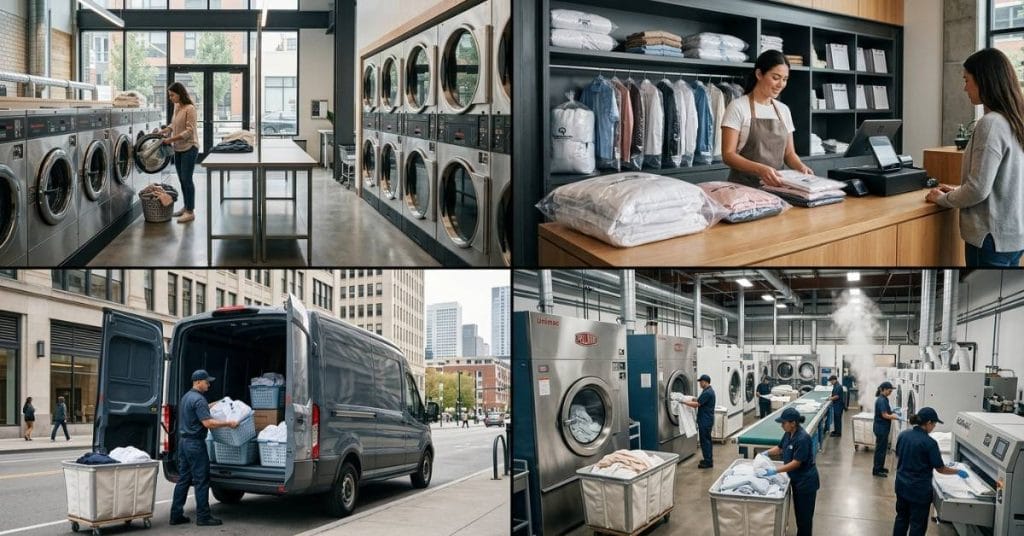
Self-service laundromats work best in densely populated areas, where people need public machines. These types of businesses typically require a higher initial investment in equipment, but have lower labor costs.
Wash-and-fold businesses emphasize convenience. Customers deposit their clothes and employees do the washing, drying, folding, and packaging. While this model has higher labor costs, the profit margin per customer is often higher.
Pickup and delivery laundry services are growing rapidly, as convenience-focused business models work well in busy urban areas. However, transportation costs, logistics, and scheduling pose significant operational challenges.
Commercial laundry services work with hotels, restaurants, gyms, spas, hospitals, and salons. These contracts can generate stable and regular income, but require industrial-grade machines and greater operational capacity.
The best business model depends on your budget, local demand, competition, and long-term goals.
Why Location Matters More Than Most People Think
Location determines whether a laundry business will survive or fail.
The best locations are usually near:
- Apartment complexes
- Student housing
- Urban residential areas
- Worker-heavy neighborhoods
- Hotels and hostels
- High foot-traffic areas
People choose laundry services primarily for convenience. If customers have to travel a long distance, even excellent service can be a problem.
Parking is also an important factor. Customers carrying heavy laundry bags avoid places where parking is difficult or transportation is poor.
One mistake many new business owners make is to focus solely on cheap rates. Low rates may seem attractive at first, but a lack of visibility or low customer traffic often leads to big financial problems later.
Service infrastructure is equally important. Poor sewage systems, unstable power supply, or low water pressure can create major operational problems for a laundry business.
Before signing a contract, the service capacity should always be carefully verified.
Choosing the Right Washing Machines
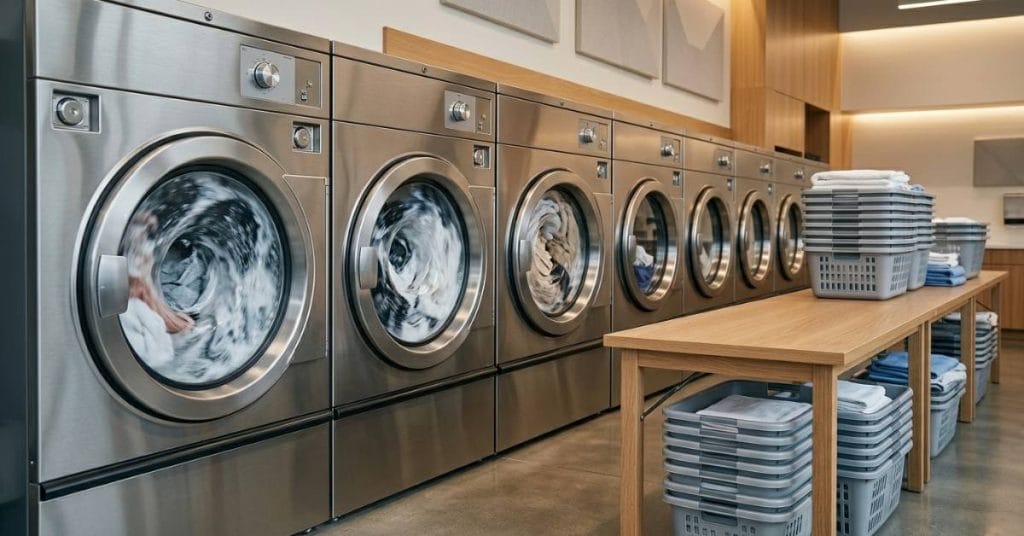
Washing machines are the foundation of a business. Poor equipment selection can lead to increased maintenance costs, wasted service, and customer complaints.
Commercial-grade washers are generally a better investment in the long run than residential machines, as they are designed for continuous, daily use.
Front-load commercial washers are often preferred because they:
- Use less water
- Consume less electricity
- Provide better cleaning efficiency
- Reduce detergent usage
- Create lower long-term operating costs
The capacity of the machine should be in line with your target customer group. Small machines limit the load of laundry for large households, while large machines waste energy when demand is low.
Most successful laundromats use a mix of different-sized machines to efficiently serve different customer needs. Dryers are equally important. A faulty drying system increases energy costs and reduces customer churn.
Modern customers also prefer digital payment systems, faster cycle options, and cleaner machine interfaces.
Understanding Utility Costs Before Opening
One of the biggest mistakes when planning a laundry business is underestimating the cost of the service.
Laundry businesses depend heavily on:
- Water
- Electricity
- Gas
- Drainage
- Ventilation
These costs continue to add up every day, regardless of the number of customers. Older machines often use significantly more water and energy. While the initial cost of high-efficiency equipment is higher, it usually saves money in the long run by reducing utility bills.
Saving water is especially important, as waste quickly adds up to operating costs.
Dryers also use a lot of energy. Poor ventilation forces the dryer to work harder, which increases electricity costs and shortens the life of the equipment. Before starting a business, owners should carefully calculate daily utility costs rather than guessing.
Customer Experience Is More Important Than Cheap Pricing
Many new laundries try to attract customers by simply offering low prices. This strategy often fails, as service costs and maintenance costs ultimately reduce profits.
Customers usually care more about:
- Clean machines
- Fast service
- Safe fabric handling
- Comfortable environment
- Reliable washing quality
- Pickup convenience
- Professional customer service
Laundry businesses that damage clothes quickly lose customer trust. Businesses that focus on quality of service often outperform cheaper competitors in the long run.
Why Fabric Knowledge Matters in Laundry Businesses
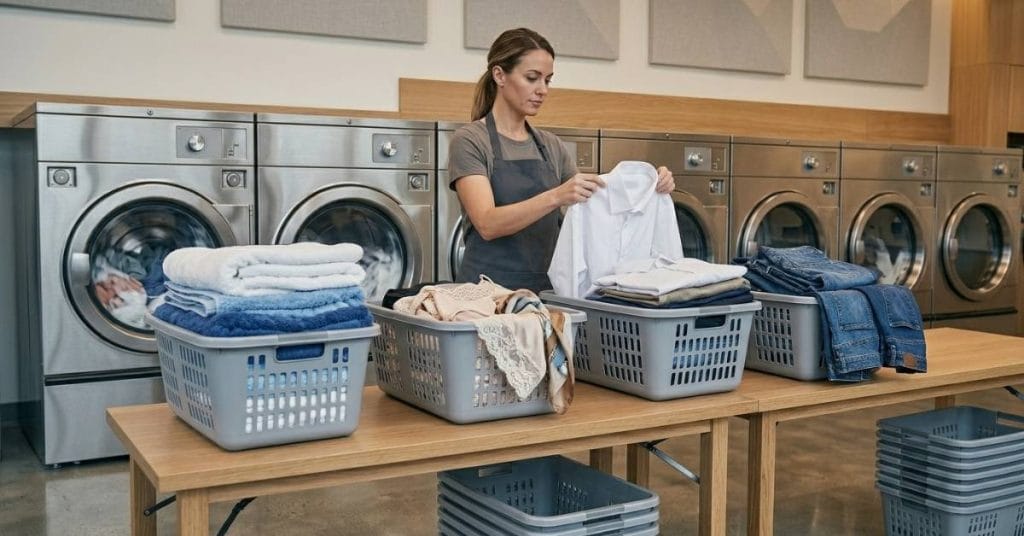
Many customer complaints are due to incorrect washing methods rather than machine malfunctions.
Using the wrong wash cycles can cause:
- Shrinking
- Color fading
- Fabric stretching
- Pilling
- Fiber damage
Understanding washing machine modes is crucial for professional laundry businesses.
For example, heavy-duty cycles work well for towels, work clothes, jeans, and bed sheets, but over-washing can damage delicate fabrics like silk, wool, and stretch fabrics.
Businesses that understand the right cycle selection can significantly reduce customer complaints.
That’s why Washely’s educational resources are beneficial for laundry business owners. The platform includes laundry-related guides, explanations of washing machine modes, and tools that help users understand cycle settings, wash performance, detergent usage, and fabric care.
Rather than relying solely on guesswork, business owners can use well-organized laundry guidelines to improve the consistency of their operations.
The Hidden Costs Most Laundry Businesses Ignore
Many entrepreneurs focus only on startup equipment costs while ignoring ongoing operational expenses. Common hidden costs include:
- Machine repairs
- Plumbing maintenance
- Drain cleaning
- Detergent waste
- Water leaks
- Dryer vent cleaning
- Staff turnover
- Customer compensation for damaged clothing
Machine downtime also directly impacts profitability. Every broken washer reduces the potential for daily revenue.
Preventive maintenance is much cheaper than emergency repairs. Successful laundry businesses usually have regular inspections and cleanings in place rather than waiting for machines to break down.

Marketing a Laundry Business in 2026
Traditional signage alone is no longer enough. Most customers now search online before visiting a local business. Without a strong online presence, many laundry businesses simply lose customers.
A modern laundry business should focus on:
- Local SEO
- Google Business Profile optimization
- Customer reviews
- Social media visibility
- Mobile-friendly website design
- Pickup scheduling convenience
Educational content marketing also helps build trust and increase search traffic.
Articles on laundry tips, stain removal, fabric care, detergent selection, washing machine methods, and clothing protection can naturally attract long-term readers. This approach helps businesses establish their authority without relying solely on paid advertising.
Expanding Beyond Basic Laundry Services
The most profitable laundry businesses often expand into additional services over time. Possible expansion ideas include:
- Shoe cleaning
- Carpet cleaning
- Curtain washing
- Commercial contracts
- Hotel laundry partnerships
- Uniform cleaning
- Subscription laundry plans
- Express same-day services
Diversification creates additional revenue streams and reduces dependence on walk-in customers alone.
Common Reasons Laundry Businesses Fail
The problems of most failing laundry businesses are similar. Some businesses underestimate utility costs. Others buy inferior machines that require constant repairs.
Poor customer service also quickly destroys customer retention rates. If customers experience problems like damaged clothes, inconsistent wash quality, or delays in receiving their orders, they usually don’t return.
Many owners also neglect cleanliness. Customers associate dirty laundry with poor hygiene and unreliable wash quality.
Another major problem is poor financial planning. Businesses often overspend on initial renovations, while leaving insufficient funds for maintenance and operating expenses.
A successful laundry business requires not only an initial investment but also long-term management discipline.
Final Thoughts
A successful washing machine business plan is not just about buying equipment and opening a store. It requires detailed planning, service management, customer service strategies, equipment functionality, knowledge of fabric care, and long-term management thinking.
There is still a great opportunity in the laundry industry, as clean clothes are an essential need. However, competition is increasing, and customers expect a much higher quality of service than ever before.
Businesses that focus on operational efficiency, customer trust, proper machine use, and educational guidance generally do much better than businesses that compete solely on low prices.
Having knowledge about laundry systems, washing machine modes, cycle selection, and fabric protection also helps reduce customer complaints and retain customers.