
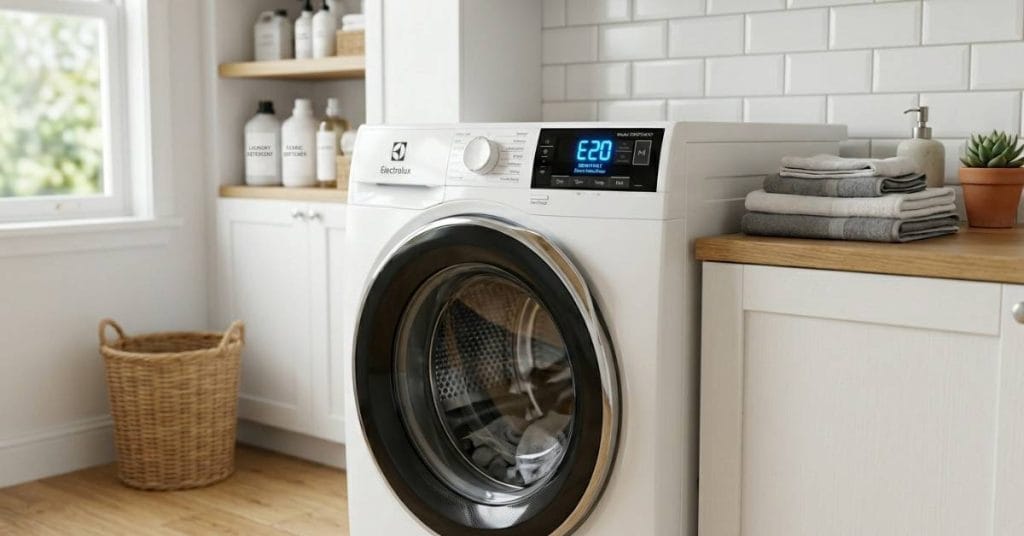
Imagine this: It’s laundry day. You’ve put a full load of clothes in your Electrolux washer, pressed the start button, but instead of the familiar hum of the drum spinning, you’ve got a flashing code on the display and maybe a few annoying beeps. What you planned for has now turned out to be the exact opposite of what you expected.
The good news: That mysterious code on your screen is actually your washing machine trying to help you. Electrolux specifically includes self-diagnosis features in their appliances so you can pinpoint the problem without having to take everything apart or call a technician right away. Once you understand what each code means, you might be surprised to find that you can often solve it yourself.
This guide discusses every major error code on Electrolux washing machines — what they mean, what the possible causes are, and exactly what to do to fix them. Whether you have a front-loader, top-loader, or one of their combo washer-dryer models, you’ll find everything you need here.
Before You Do Anything Else: Try a Reset First
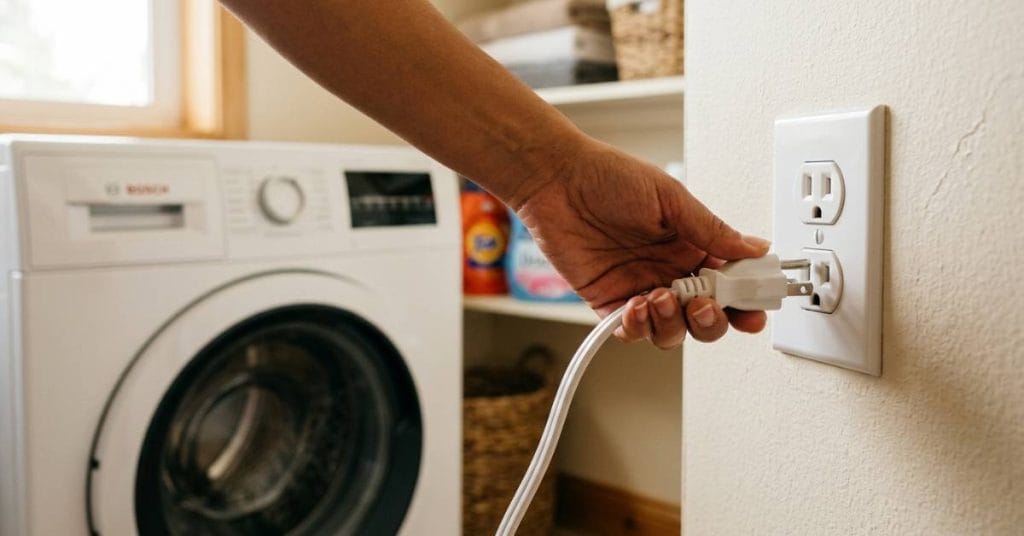
It may sound almost too simple, but before looking into a specific error code, try resetting your machine. Sometimes error codes appear due to power fluctuations or a temporary electrical fault, and are not caused by an actual hardware problem.
How to reset an Electrolux washing machine:
- Press the power button to turn the machine off.
- Unplug it from the wall outlet completely.
- Wait a full 60 seconds (not 10, not 30 — a full minute).
- Plug it back in and power it on.
- Start a new wash cycle and see if the error returns.
If the code goes away and doesn’t come back, you’re done. It was probably just a temporary glitch. But if the same code appears again, that’s a signal to fix the underlying problem. Don’t just keep resetting and ignoring it. Repeated error codes almost always mean that something serious is going on, and running the machine anyway risks making the situation worse.
How Electrolux Error Codes Are Organized
One very useful aspect of Electrolux’s system is that the codes are not random, but are arranged by category. The first number (or numbers) after the “E” tells you which system is having the problem:
- E1x — Water supply/water filling problem
- E2x — Water drainage problem
- E3x — Water pressure sensor/leak detection
- E4x — Door lock problem
- E5x — Motor problem
- E6x — Heating system problem
- E7x — Temperature sensor (NTC) problem
- E9x — Control board/communication error
- EF code — Water leakage or overflow warning
- EH code — Power supply problem
So, if you see ‘E23’, you’ll know it’s drain-related before you even look. This one thing alone can save you a lot of time.
Note: Electrolux, AEG, and Zanussi washing machines use the same manufacturing platform, which means their error code systems are essentially the same. If you can’t find information about an AEG Lavamat or Zanussi error code, you can search for the equivalent Electrolux code and get the same answer.
Electrolux Washing Machine Error Codes: Full List & Fixes
E10 / E11 / E12 — Water Supply Problems
This means: Your washing machine is not getting enough water, or is not filling in the expected time.
These are some of the most common error codes displayed on Electrolux machines, and they can often be resolved without any tools.
E10 = General water inlet error (no water entering the machine), E11 = Machine not filling during the wash phase, E12 = Machine not filling during the next wash phase
What to check:
- The tap. It sounds obvious, but make sure the water supply valve connected to your washing machine is fully open. Sometimes these get bumped partially closed without anyone noticing.
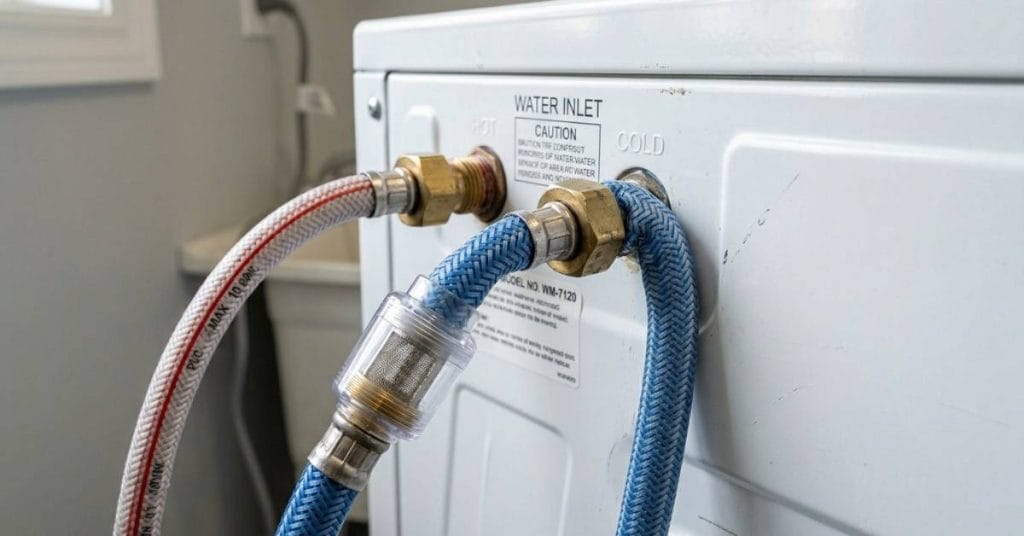
- The hoses. Trace both the hot and cold water inlet hoses from the wall to the back of the machine. Look for kinks, bends, or anything squishing the hose against the wall. Even a slight kink can dramatically reduce water flow.
- The inlet hose filters. There are small mesh screens where the hoses connect to the machine. These catch debris over time and can get completely blocked. Turn off the water supply, disconnect the hoses, and check those mesh filters. Rinse them clean under running water.
- Water pressure. Your home’s water pressure needs to meet a minimum threshold for the machine to fill properly. If other fixtures in your home seem to have low pressure at the same time, that’s a household plumbing issue rather than a washer problem.
When to call a professional: If you’ve checked everything above and only need to replace the water inlet valve, it’s usually a simple part replacement, but if you’re not comfortable repairing the appliance yourself, a technician can do the job quickly.
E13 — Water Leak Detected
This means: The device has detected that the water level is dropping unexpectedly, which usually indicates a hole or leak somewhere.
What to check:
- Make sure the drain hose is positioned correctly. It shouldn’t hang below the water level in the drum, as this can siphon water out unintentionally.
- Check the hoses themselves for any visible cracks, splits, or loose connections.
- Inspect the area under and around the machine for any signs of water pooling.
If the hoses look fine, the pressure sensor may be giving an incorrect reading and needs to be replaced.
E20 / E21 / E22 / E23 / E24 — Drainage Problems
What it means: The machine is having trouble draining the water. This is one of the most reported categories of Electrolux washing machine fault codes.
- E20 = General drain error
- E21 = Water is draining too slowly
- E22 = Water is remaining in the drum
- E23 = Drain pump problem
- E24 = Drain pump sensor problem
The wash cycle will finish (or stop halfway through), and water will pool in the drum. You may also notice that the machine is making a constant humming or pumping sound.
What to check — start with these before anything else:
- Drain hose location. This is the most common cause. The height of the drain hose should be between 60 cm and 100 cm from the floor. If it is too low, water will siphon back out. If it is too high, the pump cannot effectively push water through it. Also, make sure that it is not inserted too far into the drain standpipe — no more than 10 cm down.
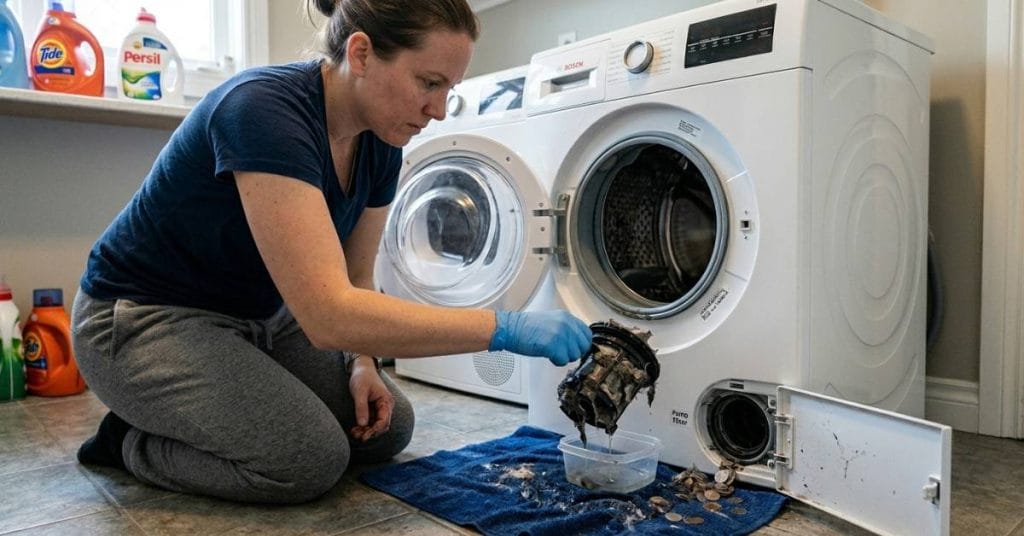
- Pump filter (fluff filter). This is the most important maintenance task for any front-loading washing machine, and most people skip it. The pump filter is usually located behind a small panel on the bottom front of the machine.
To clean it:
- Place a towel on the floor and have a shallow bowl or tray ready.
- Open the access panel and slowly unscrew the filter cap — water will come out, so do this slowly.
- Pull out the filter and clean out any lint, coins, hairpins, tissue paper, or whatever else has accumulated in there (you’d be amazed).
- Check the filter for any damage, then screw it back in firmly.
- Also, take a look at the pump blade inside — if you can see it, rotate it gently with a pencil to make sure it’s not seized.
- The drain hose itself. Open both ends and run water through it to check for any blockages. A bent wire hanger can help clear stubborn blockages.
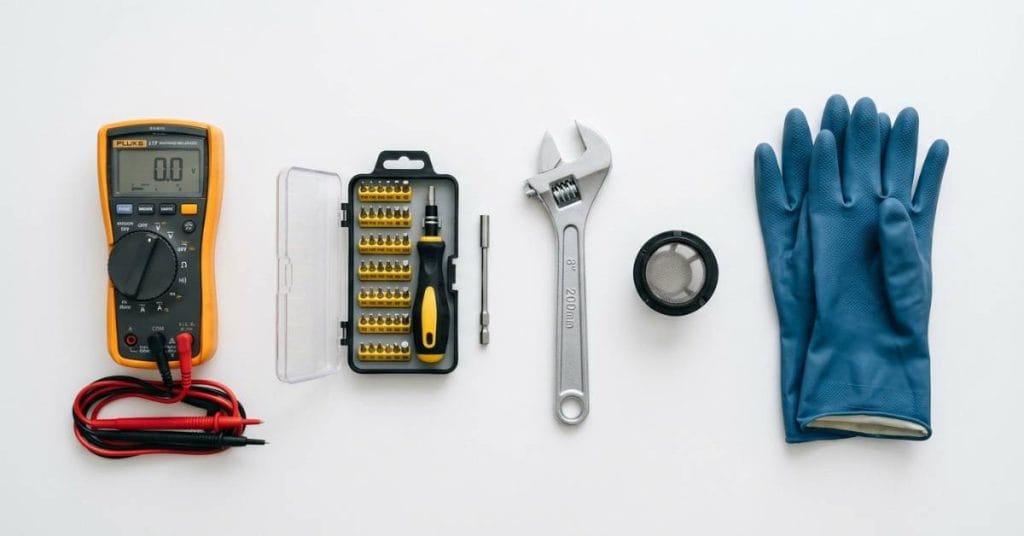
When to call a professional: If the filter and hose are clean but the machine still won’t drain, the drain pump itself may be damaged. A technician can test this with a multimeter and replace it if necessary. In some cases, a damaged PCB (control board) can show these codes even if the pump is fine.
Temporary solution while you wait: If you need to get your clothes out, you can manually drain the machine by placing the drain hose below the drum level and letting gravity do the work. Just have towels ready.
E30 / E31 / E32 / E33 / E35 / E38 — Pressure Sensor / Water Level Issues
This means: The pressure switch (which measures the water level in the drum) is detecting something unexpected, or the two sensor readings are not matching.
- E30 = Water level sensor is detecting a problem
- E31 / E32 = Inconsistency in pressure switch readings
- E33 = Two pressure sensors are active at the same time (this should not happen)
- E35 = Water level is higher than expected
- E38 = Pressure switch circuit problem
These can sometimes be associated with drainage problems — if the machine is not draining properly, the water level sensor is also confused.
What to check:
- Inspect the pressure hose (a small rubber tube that connects the drum to the pressure switch). If it’s kinked, cracked, or has come loose, that will cause false readings.
- Check the drain hose and filter, since drainage problems often trigger pressure sensor codes.
- If you’ve recently moved the machine or had work done nearby, make sure the pressure hose is reconnected properly.
Apart from the hose pipe, most pressure sensor problems require a technician, as proper test equipment is required to test the switch and any related PCB issues.
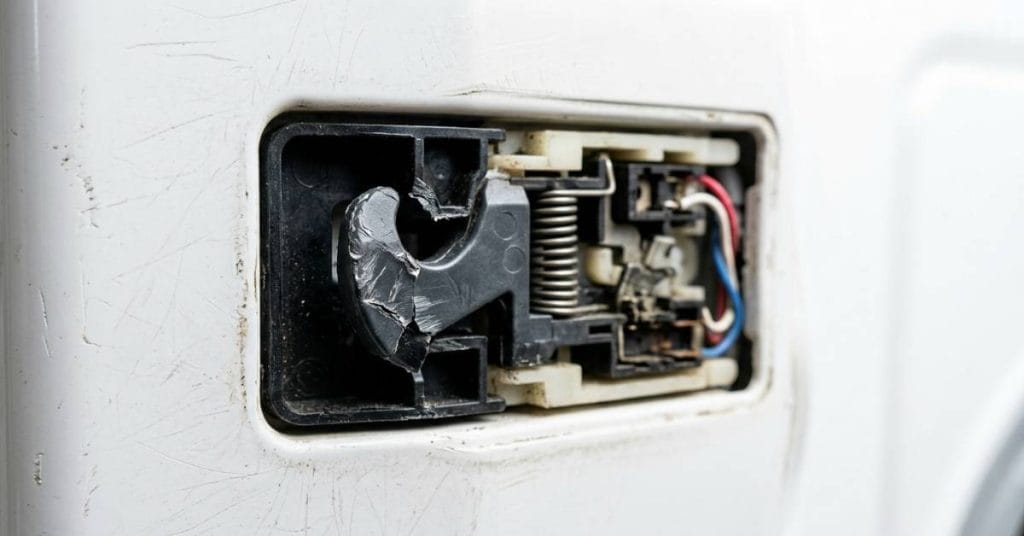
E40 / E41 / E42 / E43 / E44 / E45 — Door Lock Problems
This means: The machine has detected a problem with the door; either it is not closing properly, or the locking mechanism is not working properly during the cycle.
These codes prevent the machine from running as a safety measure. The door lock is activated during the wash and spin cycles to prevent water from spilling out, so the machine will not run without it.
- E40 = Door detected as open during a cycle
- E41 = Door lock not working properly
- E42 / E43 / E44 = Door lock system error
- E45 = Door lock sensor signal problem
What to check:
- Open the door and close it again firmly — you should hear a distinct click. Make sure no clothing is caught in the door seal, preventing a complete close.
- Look at the door seal (gasket) for any tears or items lodged in it.
- Check the door latch and the strike plate on the machine frame for any visible damage.
- If you have a multimeter, you can test the door interlock for continuity. It should show continuity when engaged.
If the latch looks fine but the code remains: The door interlock assembly is likely damaged. This is a fairly simple repair. The part is usually inexpensive and can be replaced without much difficulty on most models.
A note about child lock: If your machine displays a lock-related indicator and you have recently turned on the child lock (or accidentally turned it on), consult your manual to learn how to turn it off. This usually involves holding down two buttons at the same time for a few seconds.
E50 / E51 / E52 / E53 / E54 — Motor Problems
This means: There is a fault in the washing machine’s motor or motor control circuit. These are relatively serious error codes in terms of potential repair costs, but some can be resolved without major intervention.
- E50 = General motor error / Motor not communicating with control board
- E51 = Motor triac error (electronic switch controlling motor)
- E52 = Motor speed not detected (tach signal problem)
- E53 = Motor triac sensing circuit problem
- E54 = Motor relay error
What to check first:
- Check that the electrical plugs are properly connected to the motor. A loose connector can trigger motor fault codes without any actual motor damage.
- Rotate the drum by hand (with the machine unplugged). It should spin freely with no grinding or resistance. If it doesn’t spin freely, something may be physically obstructing the drum.
- Carbon brushes — This is the most common fix for E52 codes on older Electrolux machines. The motor brushes wear down over time and, when worn below about 10mm, the motor loses power and triggers fault codes. Replacing brushes is one of the most cost-effective washing machine repairs there is, and many people do it themselves.
When you need a technician, Motor triac fault (E51), control relay fault (E54), and communication problems between the motor controller and the main board usually require professional diagnosis and repair. These are not things most people can fix on their own.
E60 / E61 / E62 / E63 / E66 / E67 / E68 / E69 — Heating System Problems
This means: There is a problem with the water heating system. The machine may run, but the water will not reach the correct temperature, which will result in clothes not being cleaned properly in hot water.
- E60 = General heating error
- E61 = Heating element not heating up within the expected time
- E62 = Temperature rising too quickly (possibly thermostat short circuit)
- E63 = Overheating detected
- E66 = Heating relay error
- E67 = Heater sensing relay is faulty
- E68 = Current leakage in heater (or blown fuse)
- E69 = Heating element relay faulty
What to check:
- The wiring to the heating element and the temperature sensor — look for any obviously loose connections.
- The heating element itself can be tested with a multimeter for continuity. No continuity = failed element that needs replacing.
- In hard water areas, scale buildup on the heating element is extremely common and can cause it to fail prematurely. Running a descaling cycle regularly (every 2-3 months if you have hard water) is one of the best things you can do for your machine.
When to Call a Professional: Codes E66, E68, and E69 are related to relay and electrical faults, which should be resolved by a qualified technician. Working on electrical components without proper knowledge is a safety risk.
E70 / E71 / E74 — Temperature Sensor (NTC) Problems
This means: The NTC thermistor, which measures the water temperature, is giving an incorrect reading or it is broken.
- E70 = NTC temperature sensor error (open circuit or disconnected)
- E71 = NTC sensor failure (drum water temperature sensor)
- E74 = Water temperature not increasing even though the heating element is on
What to check:
- Using a multimeter, test the NTC thermistor’s resistance. At room temperature, it should read between approximately 5,000 and 10,000 ohms. A reading outside this range means the sensor has failed and needs replacing.
- Also, check the wiring harness to the sensor for any obvious damage or loose connections.
- In hard water areas, descaling the machine can sometimes resolve E70/E71 codes caused by scale interfering with sensor readings.
NTC thermistors are inexpensive parts and are fairly easy to replace in most Electrolux models.
E80 / E81 / E82 — Recirculation Pump / User Interface Problems
This means: There is either a problem with the recirculation pump (which is present in some Electrolux models and recirculates water through a spray nozzle during washing) or with the user interface board.
These codes usually require a service visit. Write down the correct code and have it ready when you contact Electrolux service.
E90 / E91 / E92 / E93 / E94 / E97 / E98 / E9E — Control Board Communication Errors
This means: The main control board (PCB) is not communicating properly with one or more components, such as the user interface board, motor controller, or other modules.
- E91 = Communication error between the user interface board and the main control board
- E92 = Software incompatibility between boards
- E93 = Program selection problem
- E97 = Frequency problem on the control board
What to try first:
- Unplug the machine, wait at least 30 seconds, then plug it back in. This clears the board’s memory and sometimes resolves communication errors caused by temporary glitches.
- If the code immediately returns after a restart, that points to a genuine board issue.
These errors usually require professional service. A technician can determine whether the problem is with the wiring/connector (a cheaper fix) or requires a board replacement (which is more expensive).
EF0 / EFO / EF3 — Water Leak / Anti-Flood / Overflow Warnings
What it means: The EF code indicates that the machine has detected water where it shouldn’t be. This could be due to foam overflow, an actual water leak, or the machine is shaking excessively due to an unbalanced load.
- EF0 = Anti-flood warning, foam overflow, or serious machine imbalance
- EF3 = Aqua-control system warning (hole detected in water supply hose pipe)
For EF0:
- If you used too much detergent or the wrong type (non-HE detergent in an HE machine), excessive foaming can trigger this code. Run a rinse-only cycle to clear the foam.
- If it’s a balance issue, redistribute the load inside the drum and restart.
- If neither applies, check for a water leak at the base of the machine.
For EF3:
- Check the water supply hose connections at both the wall tap and the machine inlet. Any drip here can cause water to collect inside the machine’s base, triggering the Aqua-Control sensor.
- Sometimes you need to tip the machine gently to drain accumulated water from the base tray before it will restart normally.
EH0 / EH1 — Power Supply Problems
This means: The device is detecting a problem with its incoming power supply, either the voltage is outside acceptable limits, or there is a problem with the frequency.
What to check:
- Is the machine on a dedicated circuit, or is it sharing with other high-draw appliances? Overloaded circuits can cause voltage fluctuations.
- Check the power cord and wall outlet for any damage.
- If the outlet seems fine, the issue might be with local power quality during a brownout — try again later.
- Persistent EH codes without an obvious power issue may indicate a main board fault.
Older / Simpler Model Codes (E01–E07)
Some older or more basic Electrolux models use a simpler E0x code format:
| Code | Meaning |
|---|---|
| E01 | Low temperature — open circuit in the temperature sensor |
| E02 | Insufficient water supply — check the tap and inlet valve |
| E03 | Door unlocked — probable door switch fault |
| E04 | High temperature — short circuit in the temperature sensor |
| E05 | Water level too high at the end of the program — drain pump fault or clog |
| E06 | Water level too high at the end of the program — drain pump fault or clog |
| E07 | Water level too high at end of the program — drain pump fault or clog |
Quick Reference Chart
| Code | Category | DIY Possible? | Call a Tech? |
|---|---|---|---|
| E10, E11, E12 | Water supply | ✅ Usually | If the pump has failed |
| E13 | Water leak | ✅ Check hoses first | If the pressure sensor is faulty |
| E20–E24 | Drainage | ✅ Most cases | Leak/foam |
| E30–E38 | Pressure sensor | ✅ Check hose | If the latch assembly needs replacing |
| E40–E45 | Door lock | ✅ Sometimes | If the switch/PCB is faulty |
| E50–E54 | Motor | ✅ E52 (brushes) | E51, E53, E54 |
| E60–E69 | Heating | ✅ Element test | E66, E68, E69 |
| E70–E74 | Temperature sensor | ✅ Sensor replacement | If wiring is damaged |
| E80–E82 | Recirc pump / UI | ❌ | Yes |
| E90–E9x | Control board | Try reset first | Usually |
| EF0, EF3 | If the base has water pooling | ✅ Often | If base has water pooling |
| EH0 | Power supply | ✅ Check outlet | Leak/foam |
How to Run Electrolux’s Built-In Diagnostic Mode
On many Electrolux IQ-Touch and Wave-Touch models, you can view the last five error codes stored in the machine:
- Make sure the machine is in standby mode (not in the middle of a cycle).
- Press and hold the Cancel and Start buttons together for about 6 seconds.
- The error code will be displayed as two numbers followed by an “E”.
- E00 means that no errors have been stored.
To clear stored error codes on many models: Press and hold the button at the bottom left of the display and the Cancel button together for 3 seconds.
To exit diagnostic mode: Unplug the machine for 5-8 seconds, then plug it back in or turn the program knob fully clockwise twice to return it to the starting position.
(Note: Diagnostic procedures vary by model. Always refer to your specific model’s manual for the exact steps.)
When to Stop Troubleshooting and Call a Technician
There’s no shame in knowing when to hand it off. Here’s when to skip the DIY route and call an authorized Electrolux service technician:
- The error code returns immediately after every reset
- You’ve gone through all the relevant troubleshooting steps, and nothing worked
- The error code falls in the E80–E82 or E90–E9x range (control board / PCB issues)
- Any E5x motor code beyond a simple carbon brush replacement
- E66, E68, or E69 (heating electrical faults)
- You see water coming from the machine itself (not just a loose hose connection)
- The machine makes grinding, screeching, or burning smells
When calling, write down the exact error code and when it occurred. This information helps the technician prepare before they arrive and can prevent an unnecessary second visit.
Electrolux Washing Machine Maintenance Tips to Prevent Future Error Codes
Many common Electrolux fault codes can be prevented entirely with a little regular care. Here’s what really makes a difference:
Clean the pump filter every 1-3 months. This is the most important maintenance task. A clogged filter is the root cause of a large proportion of E20–E24 drain codes. It takes about five minutes and costs nothing.
Use the right amount of detergent. Modern front-loaders are designed for HE (high-efficiency) detergent. Using regular detergent or too much of it creates excess suds, which can cause EF codes and clog the drum seals over time.
Run a hot water maintenance cycle once a month. Run an empty cycle on the hottest setting (or use special tablets to clean the machine). This kills bacteria, removes detergent buildup, and keeps the drum and door seals clean.
If you have hard water, descale regularly. Scale buildup on the heating element is one of the main causes of E60-series and E70-series codes. If you have hard water in your area, clean the inside of the drum every 2-3 months.
Do not overfill the drum. Overfilling the drum puts extra stress on the motor and bearings, creating an imbalance during the spin cycle and causing motor and balance-related error codes to appear. Leave about an arm’s length of space above the drum.
Check the hose connections annually. Once a year, pull the machine out slightly to check that all hoses are still firmly connected and that there are no cracks or corrosion. This takes five minutes and can prevent a major water leak.
Leave the door open after each wash. Leaving the door slightly open after a cycle allows the drum and door seal to dry out, preventing mold growth and keeping the seal flexible for longer.
Frequently Asked Questions
Can I use my Electrolux washer while an error code is showing?
Generally, no. Most error codes cause the machine to pause or stop operation as a safety measure. Running the machine while ignoring an error code risks damaging internal components — and in the case of water-related errors, risks water damage to your home. Fix the issue first.
Why does my Electrolux washer display error codes when I first turn it on?
If an error code appears immediately at power-on, it’s often because the machine is recalling the last error state from before it auto-powered off. This doesn’t always mean the problem is actively occurring right now — try running a new cycle to see if the code appears again during operation.
My Electrolux washer is beeping but not showing an error code — what does that mean?
On some models, the number of beeps corresponds to an error category — 1 beep for water inlet issues, 2 beeps for drain issues, 3 beeps for pressure sensor issues, and so on. Refer to your specific model’s manual for the beep code chart.
How do I know if my error code is a glitch or a real problem?
Reset the machine (unplug for 60 seconds). If the code doesn’t return when you run a new cycle, it was likely a glitch. If the same code comes back, you have a real issue to address.
Does Electrolux cover error code repairs under warranty?
Yes — if your machine is still under warranty, contact Electrolux directly for a free service visit. Unauthorized repairs can void your warranty, so don’t open up the machine yourself if it’s still covered.
Final Thoughts
Electrolux washing machines are very robust, and their built-in error code system makes troubleshooting much easier than it would be without one. Most of the most common error codes for Electrolux washing machines — especially the water inlet code (E10 series), drain code (E20 series), and door lock code (E40 series) — can be resolved at home with some simple testing and a little patience.
The key is not to panic when you see a code on the display. Take a deep breath, write down the correct code, look it up in this guide, and follow the steps methodically. Nine times out of ten, the problem is something simple.
And when the code keeps coming back, or the solution isn’t limited to cleaning the filter and checking the hoses and pipes, don’t hesitate to call a qualified technician. If you can catch problems early rather than letting a faulty machine run until it becomes a serious problem, repairing the appliance won’t be a financial shock.
The next time your Electrolux washer tries to display a problem, bookmark this guide. Because it will — and then you’ll know exactly what it’s saying.