
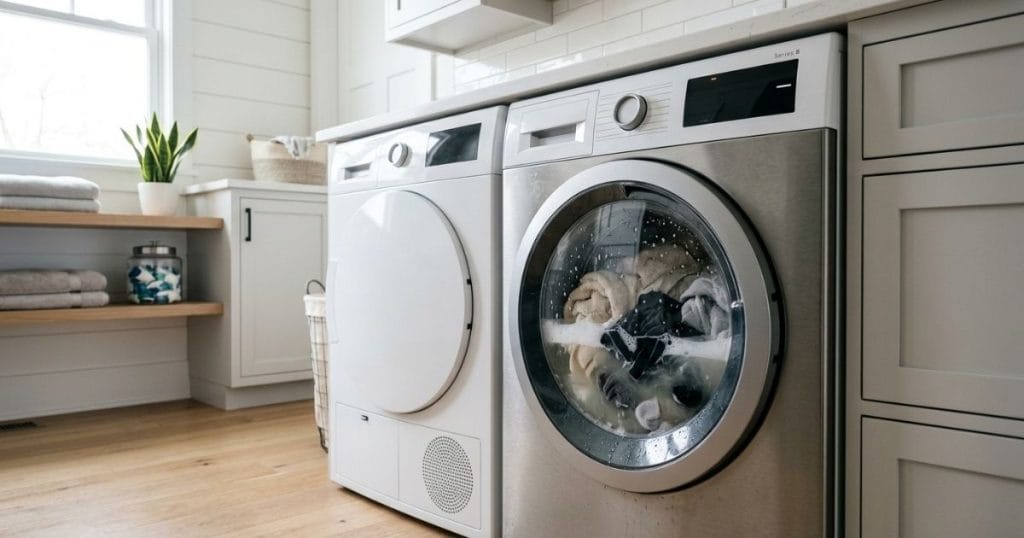
Finding your washing machine full of water at the end of a cycle can be frustrating, especially when your clothes are still soaking in dirty water. The good news is that a washer that won’t drain doesn’t always require professional repair.
In many cases, the problem is caused by something simple, such as a clogged pump filter, a kinked drain hose, a clogged drainpipe, or an installation problem. Some washers may also have a faulty drain pump, lid switch, or door-lock system.
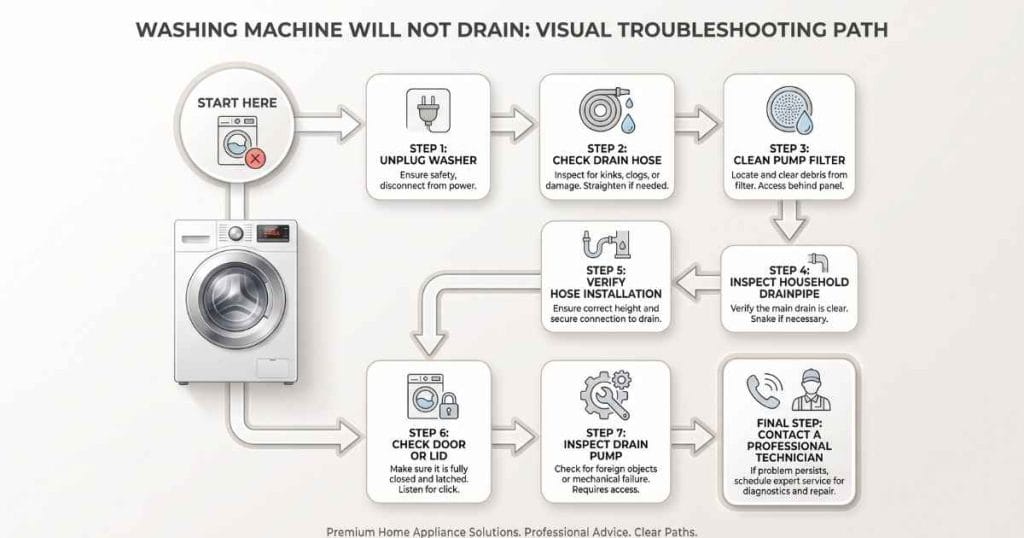
This guide explains how to fix a washing machine that won’t drain; it starts with the simplest tests and progresses to more complex troubleshooting.
Safety first: Turn off and unplug the washing machine before checking the hoses, filters, or internal parts. If there is a possibility that the water may be hot, let it cool before draining it by hand.
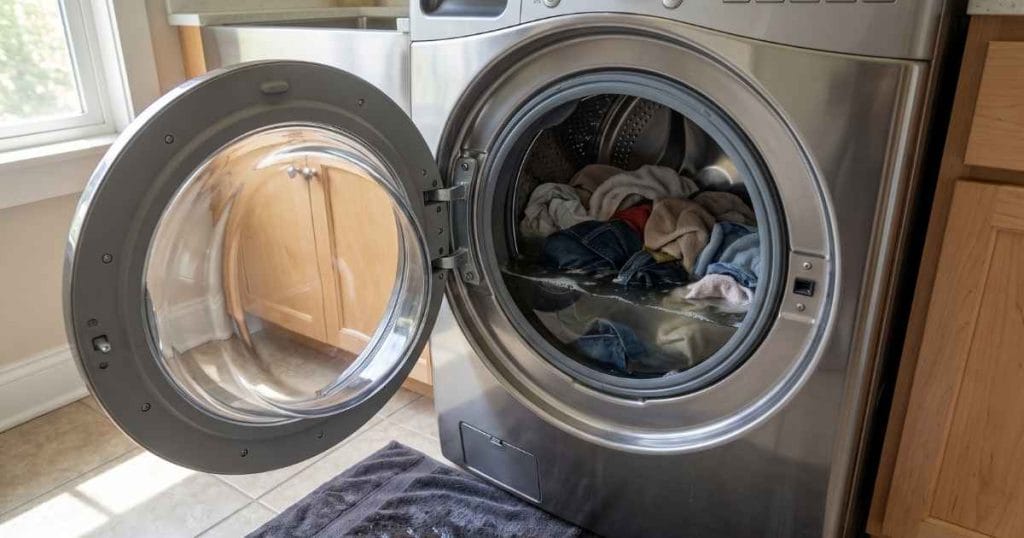
Why Is My Washing Machine Not Draining Water?
The most common reasons a washing machine won’t drain include:
- A clogged drain pump filter
- A kinked or compressed drain hose
- A blocked drain hose
- A clogged household drainpipe or standpipe
- An incorrectly installed drain hose
- A blocked or jammed drain pump
- A faulty drain pump
- A lid switch or door-lock problem
- An unbalanced or overloaded washer
- A cycle or spin-speed setting that leaves excessive water in the clothes
Manufacturers’ troubleshooting guides for Whirlpool, LG, Siemens, and Beko list the drain system—specifically the filter, hoses, pump, and drainage connections—as important areas to check. Let’s go through the tests in the safest and easiest order.
Step 1: Turn Off and Unplug the Washer
Before doing anything else, turn off the washing machine and unplug it from the electrical outlet.
If water has accumulated in the drum, do not immediately open any filters or hoses unless you are ready to drain the water. Have towels and a shallow container nearby.
Be especially careful if this water was used during a hot wash. Hot water can cause burns. Both Siemens and LG recommend taking care when draining the remaining water, as the water may still be hot.
If your washer has an emergency drain hose, you can use it to drain the accumulated water. Its location and procedure vary by model, so check your manual first.
Step 2: Check the Drain Hose
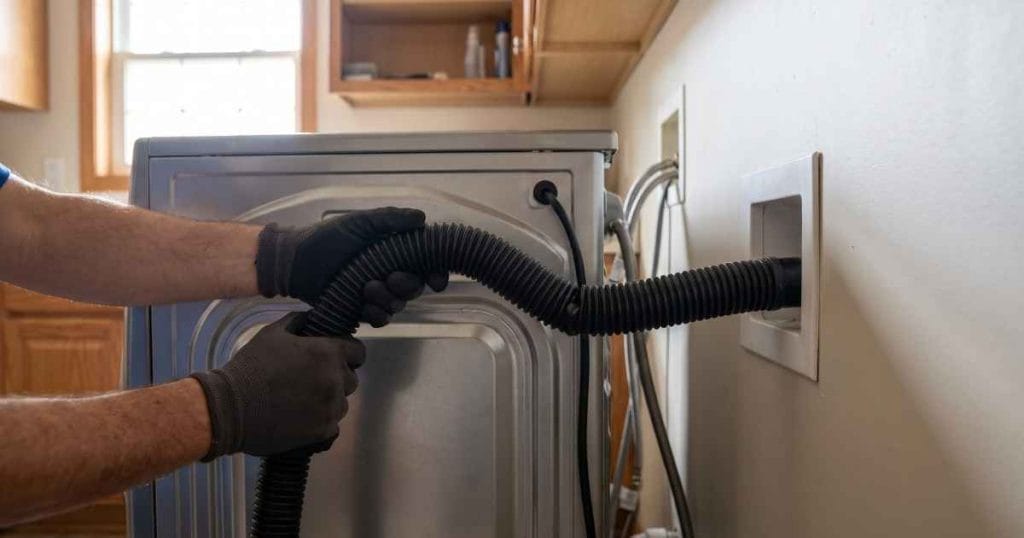
The drain hose is one of the easiest things to inspect. Look behind the washer and check whether the hose is:
- Kinked
- Crushed against the wall
- Twisted
- Blocked
- Improperly positioned
If the drain hose is clogged, the washer will not drain properly. LG specifically recommends checking the drain hose for kinks, while Siemens also recommends checking the wastewater hose for any visible kinks or obstructions.
How to fix a kinked drain hose
If necessary, carefully remove the washer from the wall and straighten the hose pipe.
Do not pull the hose pipe hard or make sharp bends in it. Make sure there is enough space behind the washer so that the hose pipe does not get crushed when the appliance is pushed back into place.
Also, check the connection between the drain hose and the house drain. Any obstruction outside the washing machine may indicate a problem with the washer.
Step 3: Clean the Drain Pump Filter
In many front-load washers, the first thing to check is whether the drain pump filter is clogged.
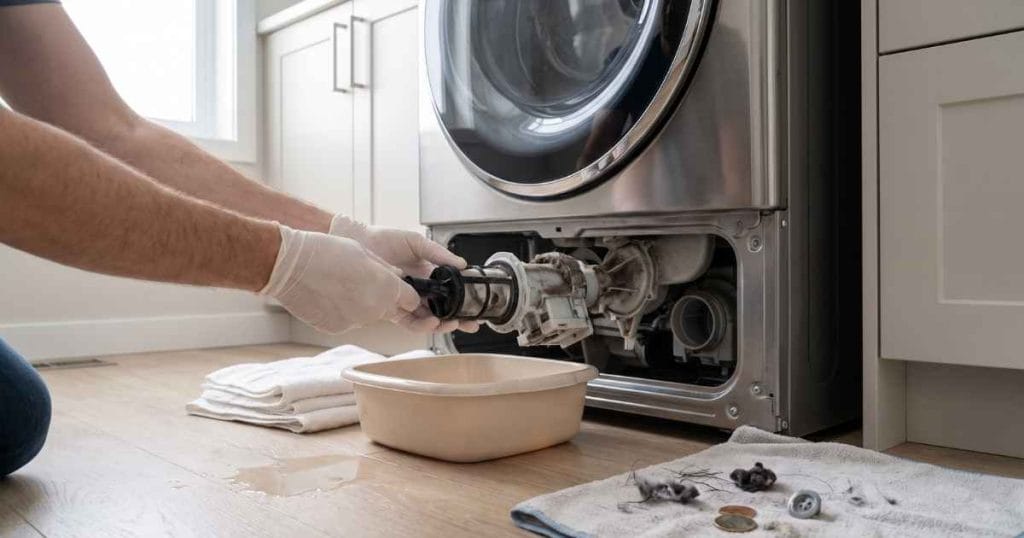
This filter is designed to trap objects like lint, coins, hair, buttons, and other debris before they reach the pump. Over time, these items can block the flow of water.
However, not all washing machines have an easy-to-use pump filter. Some newer models have different designs, so always check your owner’s manual before opening anything. Whirlpool specifically notes that the location of the filter may vary and that some washers do not have an easy-to-use filter.
How to clean a washer pump filter
- Turn off and unplug the washer.
- Locate the filter access area according to your owner’s manual.
- Place a shallow container and towels underneath.
- If the washer has an emergency drain hose, use it to drain the remaining water.
- Slowly remove the pump filter.
- Allow trapped water to drain into the container.
- Remove lint, hair, coins, buttons, and other debris.
- Rinse the filter with clean water.
- Check inside the filter housing for additional debris.
- Reinstall the filter securely.
If the washer is not draining water, LG recommends cleaning the pump filter and checking the filter housing for any dirt.
IMPORTANT: Do not force the filter if it is difficult to open. The exact procedure for opening the filter varies by model.
Step 4: Check the Household Drainpipe
Sometimes the washing machine works properly, but there is no way for the water to drain. To determine if the problem is with the washer or the house drain, you can check where the drain hose ends.
If your model’s instructions allow it, disconnect the drain hose from the standpipe or drain connection and place the hose safely in a suitable container. With the hose under control, run a drain or spin/drain cycle.
If water is coming out of the washer hose at a high speed but the house drain is overflowing, the problem may be in the drainpipe rather than inside the washer.
LG recommends a similar troubleshooting method: If water is draining properly directly from the washer drain hose but not through the drainpipe, the house drain may be clogged. Be careful when performing this test because a large amount of water can come out very quickly.
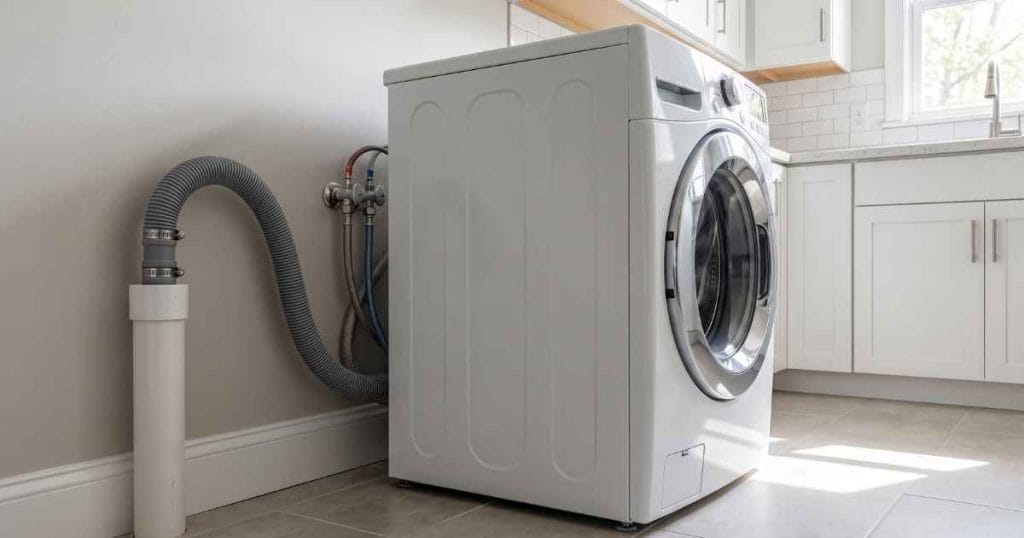
Step 5: Check the Drain Hose Installation
A washing machine may have drainage problems even if the drain hose is not visibly blocked.
The drain hose must be installed according to the manufacturer’s instructions. Incorrect hose height, insertion depth, or routing can prevent proper drainage or cause wastewater to back up into the washer.
For example, Whirlpool specifies model-specific standpipe requirements and warns that improperly installed drain hoses can cause drainage problems. Beko also provides specific height and insertion guidelines for their machines.
Since these measurements vary by model, do not use a specific universal height for all washing machines. Consult your installation manual for the exact requirements.
Step 6: Check the Washer’s Lid or Door
If your washing machine won’t drain or spin at all, check to see if its lid or door is properly closed.
Many top-load washers have a lid-lock safety system that stops certain functions if the lid is not properly closed. Front-load machines use a door-lock system. If the washer senses that the door or lid is not secured, it may stop or refuse to enter the drain/spin portion of the cycle.
Start by making sure:
- The lid or door is completely closed.
- Nothing is trapped around the door seal.
- The door lock area is clean.
- The machine isn’t displaying a door- or lid-related error.
Never disable the safety switch or door-locking system. If the safety system appears to be faulty, have the part checked or replaced according to the manufacturer’s instructions.
Step 7: Check the Drain Pump
If the hose and filter are clean but the washer is not draining, the drain pump may be clogged or broken. The pump is what pumps the wastewater out of the washer. Sometimes a small object can get stuck in the pump housing, blocking the impeller.
Depending on the model, you may be able to inspect the pump through the filter opening. Some machines require access to the internal components. If you are not comfortable opening the washer, stop at this point and contact a qualified appliance technician.
An important sign is the sound your washer makes during the drain cycle: A humming sound but no water flow. There may be a blockage or problem with the pump. Water drains very slowly: There may be a partial blockage in the filter, hose, pump, or drainpipe.
The pump makes no noise: The problem could be related to the pump, wiring, control system, lid/door protection system, or another electrical component. These symptoms are just clues rather than a definitive diagnosis, so don’t replace the pump based on noise alone.
What If the Washer Drains but Clothes Are Still Very Wet?
Not every wet laundry problem means that the washer has failed to drain. If there is little or no water in the drum but your clothes are unusually wet, check the selected cycle and spin speed.
To protect the fabric, a low spin speed may be used on the Gentle or Delicate cycle, which can leave more water in the clothes. Whirlpool recommends specifically checking the selected spin speed if the clothes come out wetter than expected.
Also check whether the washer is:
- Overloaded
- Unbalanced
- Filled with a single heavy item
- Using an unsuitable cycle
Redistribute the load and run an appropriate spin cycle if your washer allows it.
How to Tell If the Drain Pump Is Bad
Before assuming that the pump needs to be replaced, you should check to see if the filter or hose pipe is clogged.
The drain pump becomes more suspicious when:
- The filter is clean.
- The drain hose is clear and correctly installed.
- The household drain works normally.
- The washer still cannot remove water.
- The pump makes unusual noises.
- The pump runs but doesn’t move water.
- The washer repeatedly shows a drainage-related error.
Some brands use specific error codes for water drainage issues. For example, LG uses OE-like codes for specific water discharge/drainage issues. However, error codes vary by manufacturer and model, so always check the code with your specific owner’s manual.
When Should You Call a Washing Machine Repair Professional?
It’s beneficial to try to fix common blockages and hose pipe problems yourself, but some repairs are best left to a professional. Contact a qualified technician if:
- The washer trips the circuit breaker.
- You smell burning or overheated electrical components.
- The drain pump needs electrical testing or replacement.
- Internal wiring appears damaged.
- The control board may be faulty.
- The washer leaks after reassembly.
- The machine still won’t drain after basic troubleshooting.
- You need to open electrical or internal components and aren’t comfortable doing so.
Don’t continue operating a washer that shows signs of an electrical fault.
Final Thoughts
When a washing machine won’t drain properly, don’t immediately assume that the drain pump is broken. Start with the easiest possibilities: drain hose, pump filter, and house drain.
A clogged filter or kinked hose can often be fixed without replacing any parts. If these tests don’t resolve the issue, it could be related to the drain pump, lid/door safety mechanism, wiring, or electronic controls.
Since there are significant design differences among washer brands and models, always consult your owner’s manual for model-specific instructions before opening the filter, hose, or internal components.
Need Help Choosing the Right Wash Settings?
If you’re not sure which wash cycle, temperature, spin speed, or drying method is best for your clothes, Washely can help you choose the right laundry settings based on your load and fabric type.